

























































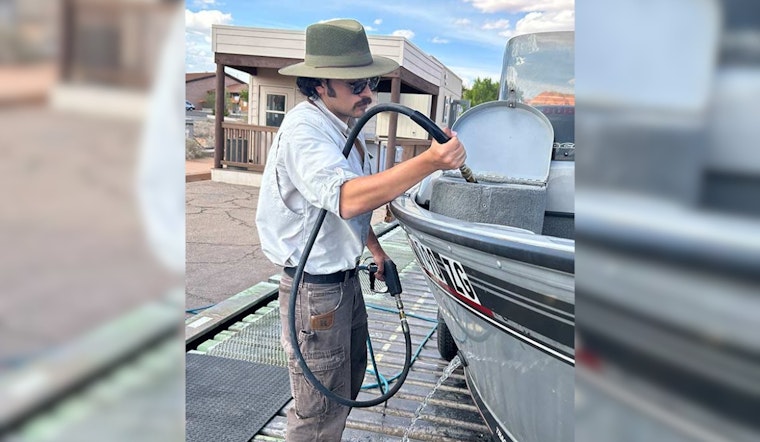
In a recent surge to safeguard Utah's waterways, the Utah Department of Natural Resources and partnering agencies conducted a massive inspection operation this Labor Day weekend, targeting aquatic invasive species. The dedicated workforce scoured the state, inspecting a notable 11,627 boats, as revealed by the Utah Division of Wildlife Resources. At Lake Powell alone, 1,499 vessels underwent scrutiny, with 25 facing subsequent decontamination measures.
Lt. Bruce Johnson, a figurehead of the Department of Natural Resources' Law Enforcement Aquatic Invasive Species Operations, remarked on the success of the dip tanks, stating, "More than two-thirds of the total decontaminations performed over the holiday weekend were done by one of our dip tanks," as per the Utah Division of Wildlife Resources. Officers also nabbed a few negligent boaters who either skipped the mandatory mussel-aware boater program course, failed to cough up the necessary fee, or neglected to remove their watercraft's drain plugs during transit.
The invasion of nonnative species like quagga mussels and Eurasian watermilfoil poses a threat not just to Utah's ecosystems but to the wallets of its residents. The mussels are notorious for clogging pipes and corroding engines, while a milfoil infestation can carpet waterways, blocking sunlight and disrupting local habitats. The damage extends beyond the ecological, with potential to wreak financial havoc on water management systems, maintenance budgets, and boating activities.
To counteract these threats, the state has made strides in establishing decontamination infrastructure. Utah now claims over 40 inspection stations and has implemented five dip tanks. These are stationed strategically across Utah to provide free, efficient decontamination for complex boats. Despite these efforts, the struggle is ongoing, and public cooperation remains critical. Boaters and enthusiasts can find a list of decontamination stations and additional requirements at the STD of the Sea website, a resource aimed to inform and equip watercraft users against the spread of these invasive foes.





