

























































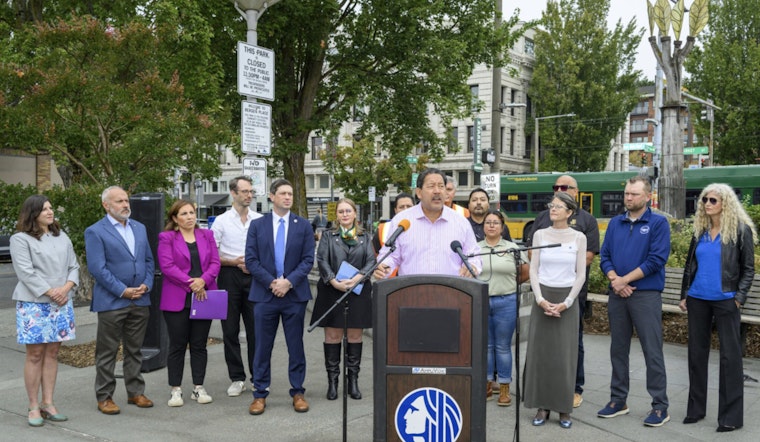
In response to rising expenses for Seattle’s Sound Transit expansion, Mayor Bruce Harrell has proposed several measures to control costs and ensure the light rail extension is delivered to residents. Harrell, together with local officials, is urging Sound Transit to implement strategies aimed at reducing financial impact while maintaining the project's overall scope. Key recommendations include streamlining processes and exploring value engineering opportunities to achieve cost savings. The mayor’s plan was detailed in a public statement as the city prepares to allocate additional budget and staff to accelerate the transit system’s development.
With the Sound Transit Board revealing a 20-25% cost hike for the complete ST3 program, which potentially equates to a $30 billion upsurge when factoring in inflation and extended timelines. Mayor Harrell, stressing the importance of these projects for the community, stated, "Major infrastructure projects like light rail expansion are facing significant cost pressures nationwide, but we cannot allow these challenges to derail our commitment to Seattle voters who overwhelmingly supported this investment," as reported by the Mayor's office. Harrell's initiatives include the potential for third-party reviews of cost, revenue, and project risks.
Seattle's light rail system, which currently facilitates up to 3.4 million boardings per month, is anticipated to witness a substantial increase in ridership with the new extensions. Specifically, the West Seattle and Ballard Link Extensions are projected to contribute over 200,000 additional daily boardings. The West Seattle Link Extension promises to enhance connectivity in key neighborhoods such as SODO, Delridge, and West Seattle, with service scheduled to begin in 2032. Conversely, the Ballard Link Extension eyes a 2039 start, aiming to link Chinatown-International District, downtown Seattle, and on through South Lake Union to Ballard.
As policymakers and civic leaders express their support, King County Executive Shannon Braddock emphasized, "We must remain focused on forward momentum—delivering both service and infrastructure supported by voters. Sustaining public confidence depends on our ability to keep delivering projects," according to a statement obtained by the Mayor's office. Similarly, Kirk Hovenkotter, Executive Director of the Transportation Choices Coalition, emphasized the need for steadfast commitment: "Voters overwhelmingly said yes to Sound Transit 3 in 2016. The promise is clear: build the damn trains."
Earlier this year, Mayor Harrell took decisive action to accelerate the light rail development process by signing an executive order and revising land use codes, effectively halving the average permitting timeframe. Last October, route and station locations for the West Seattle Link Extension were selected, setting the stage for a streamlined construction permitting phase upon final design completion.





