

























































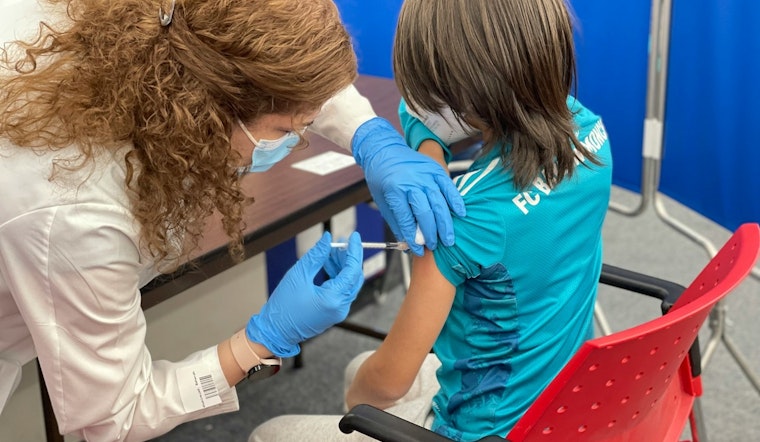
Recent recommendations from the U.S. Health Secretary Robert F. Kennedy Jr.'s vaccine advisory committee has fueled a debate in the public health community. The panel, which Kennedy restructured earlier this year, has been under scrutiny for suggesting new restrictions on the MMRV vaccines, according to the Chicago Sun-Times. The vaccine, a combination shot for measles, mumps, rubella, and chickenpox, should not be given before age 4, the panel recommends, suggesting separate vaccinations for MMR and varicella in younger children. This shift, decided in an 8-3 vote, has left both healthcare professionals and parents navigating a landscape of uncertainty.
Adding to the clouded scenario, the advisory committee delayed a vote on whether hepatitis B vaccines given to newborns could wait until they're one month old, which they're expected to address following discussions on COVID-19 shots. Amid this backdrop, the Illinois Department of Public Health is gearing up to release its own guidance that is projected to be broader than the federal limitations, as reported by ABC 7. The state, along with others, is stepping up efforts to maintain access to vaccines, despite the seemingly discordant tune from federal advisers.
Public health leaders have voiced their dismay over the panel's sway toward what they perceive to be anti-vaccine sentiments, potentially narrowing vaccine access and fostering distrust. Dr. Susan Kressly, president of the American Academy of Pediatrics, said in a statement obtained by the Chicago Sun-Times, “Thursday’s meeting promoted false claims and misguided information about vaccines as part of an unprecedented effort to limit access to routine childhood immunizations and sow fear and mistrust in vaccines." Meanwhile, Dr. Richard Haupt, a vice president at vaccine manufacturer Merck, cited that the MMRV vaccine's slight increase in feverish seizures following the first dose led to existing CDC recommendations. He stressed that combination vaccines aid in ensuring timely and complete vaccination, especially as national coverage rates are waning.
Although concerns over rare feverish seizures linked to the MMRV vaccine's initial dose for children between ages 1 and 2 have been the subject of focus, experts like committee member Dr. Cody Meissner have pointed out that these seizures aren't associated with lasting issues. Yet, even within the committee itself, there seems to be confusion on the new guidance's implications, as some members were unclear on its consistency with the Vaccines for Children program's coverage, which spans about half the shots administered to U.S. kids. Furthermore, the Chicago Department of Public Health plans to offer COVID-19 vaccines to anyone 6 months or older, a significant move in the age of vaccination hesitancy.
The discussion on the hepatitis B vaccine also saw diverging opinions. While committee member Dr. Evelyn Griffin pondered aloud, "Are we asking our babies to solve an adult problem?" by universally administering the vaccine at birth, others like Dr. Cody Meissner vouched for its safety. Dr. Robert Malone, another committee member, suggested the underlying issue is one of trust and parental comfort with early vaccination practices. Amidst these deliberations and the potential for dissenting vaccine guidelines from states and health organizations, American families and health care providers are left navigating a terrain that seems to grow thornier by the day.





