

























































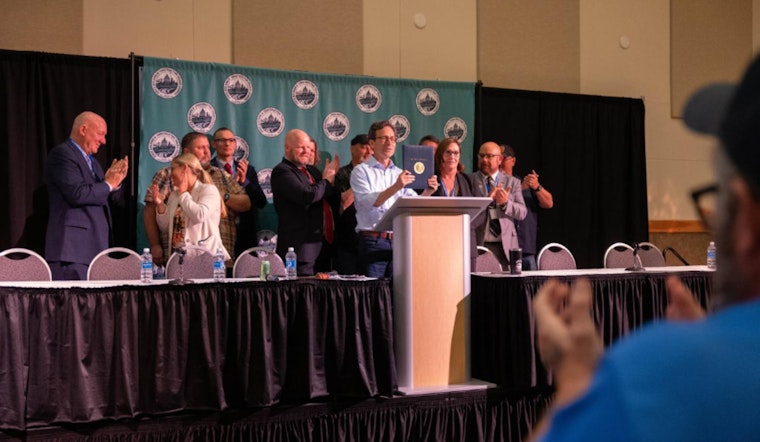
In Washington, Governor Bob Ferguson has taken a significant step to ensure fair treatment for workers on large-scale infrastructure projects. Ferguson signed an executive order at the annual convention of the Washington Building and Construction Trades Council, mandating Project Labor Agreements for state-funded construction projects exceeding $35 million. The move aims to create a more stable environment for both workers and companies engaged in these crucial endeavors, as reported by the Washington Governor's Office.
The executive order, known as 25-07, demands that these pre-hire agreements, which cover all workers, including subcontractors and those not affiliated with a union, must actively be utilized to guarantee fair pay and benefits. Furthermore, Project Labor Agreements are designed to almost seamlessly prevent work stoppages, as they include built-in dispute resolution processes and prohibit strikes and lock-outs. According to the Washington Governor's Office, "All workers deserve fair pay and benefits. This executive order provides strong protections for workers on major projects, and predictability for the public," asserted Governor Ferguson. Project Labor Agreements will significantly help in promoting jobs that sustain families, enhance worker safety, and ensure the punctual completion of infrastructure projects deemed vital for the state.
Project Labor Agreements are not a new concept but a reaffirmation of collective bargaining principle, where the terms of employment are pre-determined for everyone involved in a specific project. The transparency these agreements offer is critical, laying out working conditions and resolution channels before any labor commences. These measures are put into place to defend workers against issues often plaguing the construction industry, such as wage theft and job misclassification, through enforceable means like grievance arbitration, as per the Washington Governor's Office.
One of the standout features of Project Labor Agreements under this order is their potential to make labor costs more understandable and precise. By laying down the terms ahead of time, they prevent the kind of unforeseen expenses that too often derail project budgets. "PLAs protect workers from issues like wage theft and misclassification through mechanisms such as grievance arbitration," the Washington Governor's Office emphasized. "They also make labor costs more predictable and accurate by establishing terms at the outset of the project." This approach is designed to provide a level of foresight and financial oversight often lacking in public works projects, thereby contributing positively to both worker welfare and the successful completion of critical infrastructure developments.





