

























































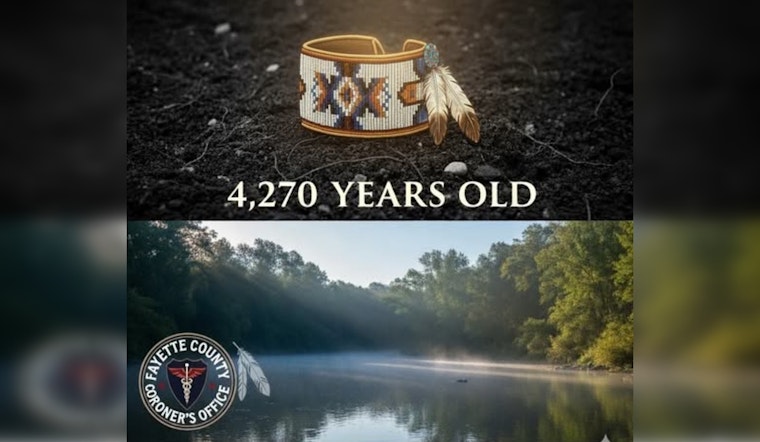
A significant archaeological find has emerged from the banks of the Whitewater River in Fayette County, Indiana, where a portion of a human skull dating back to 2300 B.C. has been discovered. The Fayette County Coroner's Office, in collaboration with experts from the University of Indianapolis Human Identification Center and the University of Georgia, determined through radiocarbon dating that the skull is approximately 4,270 years old, as reported by WLWT.
The remains, originally found on June 2, were reported to the Fayette County Sheriff's Department, with further investigation and analysis confirming the age of the remains. Fayette County Coroner Eddie Richardson highlighted the cultural significance of the findings in a statement, emphasizing the community's role in promptly reporting the discovery and praising the professional collaboration contributing to the analysis. According to FOX59, Richardson noted that the person was likely a member of Miami or Shawnee tribes that lived in the area at the time, underscoring the area’s deep historical context.
The discovery coincided with Indigenous Peoples' Day, adding resonance to the day meant to honor the history and culture of Native American people. "This remarkable discovery is a powerful and humbling reminder that people have walked this land, our home in Fayette County, for millennia," Richardson stated in a social media post obtained by WCNC.
Following the analysis, the coroner’s office is now working closely with the Indiana Department of Natural Resources (DNR) to determine appropriate next steps for the remains. The process aims to ensure the skull and site management are handled with respect for cultural and legal standards. As the DNR guidelines are awaited, an air of anticipation surrounds the next chapter of how this ancestral discovery will be treated, with authorities committed to handling the matter with dignity and responsibility. The Fayette County Coroner's Office emphasized the need to address the discovery in a manner that is fitting for such an ancient testament of the region's past inhabitants.





