

























































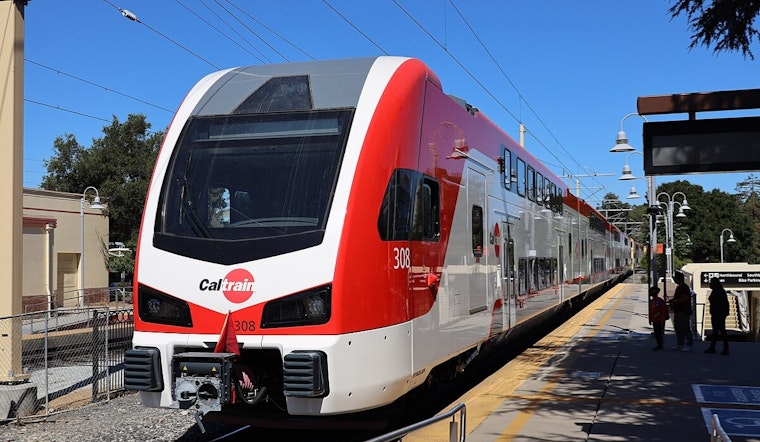
In a move lauded as financially savvy and environmentally sound, the Caltrain electric trains, which adorn the Bay Area's landscape, are now feeding power back into the community's energy grid. The genesis of this action traces back to a transformative $2.5 billion electrification effort, as noted by CBS San Francisco, which culminated in Caltrain's fleet running entirely on renewable power sources like solar and wind.
The innovative regenerative braking technology embedded within Caltrain's 17 electric trains enables it to capture and redirect about 23% of its energy back to the grid each time it decelerates, according to information provided by Caltrain's official news release. Operating on the forefront of transportation innovation, the trains epitomize a serious commitment to green energy. Previously, this regenerated electricity was returned without financial recompense.
Notwithstanding legislative hurdles, procuring a new compensation scheme for this returned energy was achieved. Michele Bouchard, Caltrain Executive Director, emphasized the importance of the breakthrough deal with Peninsula Clean Energy and San Jose Clean Energy, which was reported in an interview with CBS San Francisco, stating, "We are here to celebrate an amazing partnership that will support renewable and clean energy back into our community."
In echoing this sentiment, Assemblymember Diane Papan, whose legislative work informed the shift, highlighted the equity of the arrangement, as she told CBS San Francisco, "Caltrain was sending new, renewable energy back to the grid but wasn't getting credit for it. If this was rooftop solar, we'd absolutely get credit for what we sent back." This compensatory framework is anticipated to offset millions in energy costs annually and reinforces Caltrain's shift to an all-renewable energy model.
As Caltrain turns a new page in its 161-year legacy, it is projected to receive approximately $1 million annually from PCE and SJCE for the clean power sent back to the grid starting April 2026. This partnership reinforces the dual victories of public transit and environmental stewardship, as outlined by CBS San Francisco. San Jose Mayor Matt Mahan also advocated for the strategy's wider adoption, acknowledging it as "a smart, sustainable step" that "shouldn't stop here," and calling for innovation to be mirrored across the state's transit systems.
Editor’s Note: This article has been updated to correct the number of Caltrain’s electric trains.




