

























































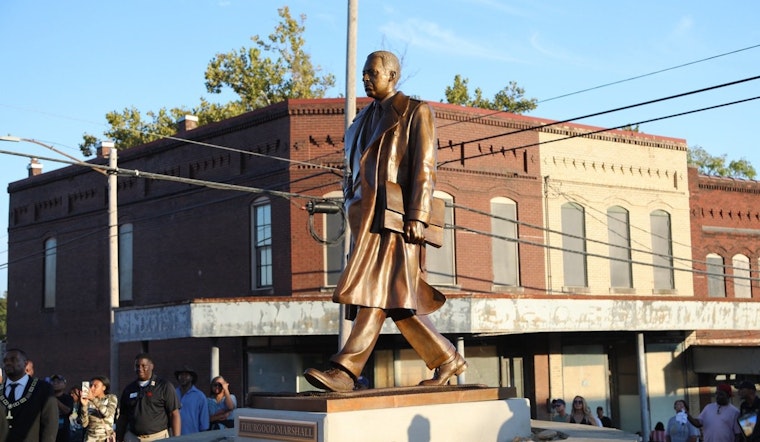
Columbia, Tennessee commemorated a major civil rights figure with the unveiling of the Thurgood Marshall statue, at the city’s new roundabout joining East 8th and South Main Streets. The Columbia Peace & Justice Initiative, alongside city officials, presented the statue last Friday, marking a historic moment for the community. Notably, this tribute arrived 58 years after Marshall's inauguration to the U.S. Supreme Court, on October 2, 1967.
According to the FOX 17 report, the statue’s location is significant, positioned at the entry to the city’s historically Black district and, commemorating Marshall's legal work during the aftermath of the 1946 Columbia Race Riot. This upheaval is remembered as a pivotal moment that foreshadowed the larger Civil Rights Movement. The work is described as a gift from the Columbia Peace & Justice Initiative to the city.
The statue stands not only as a piece of art but also as an educational tool. As outlined by the Columbia Daily Herald, it is complemented by four historical markers that narrate the events of the 1946 uprising, Marshall's involvement, and the ongoing efforts to preserve the narrative for future generations. "His unwavering commitment to equality, equal justice, and freedom made an impact on Columbia, Tennessee, and, most importantly, on the United States of America," said Trent Ogilvie, co-founder of the Columbia Peace & Justice Initiative, during the event.
The conflict that resulted in Marshall’s involvement began with a dispute over a radio repair between a young Black man, James Stephenson, and a white store clerk, which escalated into a physical altercation. After rumors of a lynching spread, the local Black community rallied, which led to an intense confrontation with law enforcement. The Tennessee Tribune detailed the arrest of 100 Black men and Marshall’s subsequent defense of 25 individuals on trial. Though an illness sidelined Marshall for most of the trials in Lawrenceburg, he returned to Columbia in November 1946 to continue his defense work.
The statue and the educational markers invite both residents and visitors to engage with Columbia’s storied past with racial tensions, as well as the history of civil rights in the United States. As CPJI Co-Founder Russ Adcox told the Tennessee Tribune, "We believe that the Thurgood statue and markers commemorating that fateful uprising will spark visitors’ curiosity, instilling a desire to explore Columbia’s history and role in Civil Rights more completely."





