

























































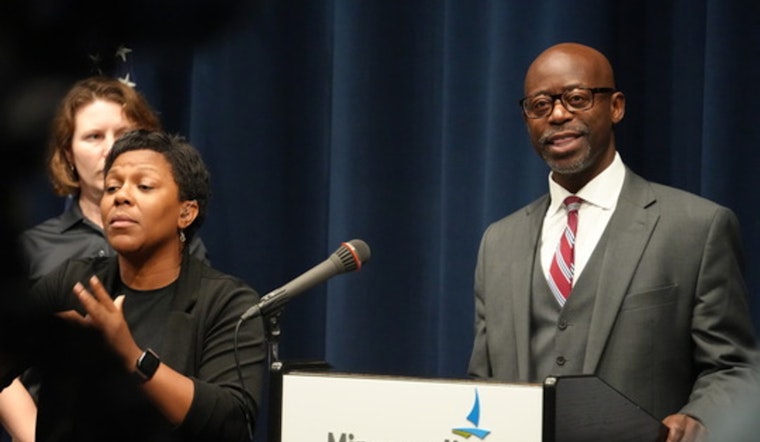
Two years into his role as Community Safety Commissioner, Todd Barnette has taken stock of the strides Minneapolis has made towards creating a more secure, transparent, and compassionate city. According to a statement on the City of Minneapolis Office of Community Safety's website, the concerted efforts have fostered new partnerships and innovative strategies aimed at reducing violence and building trust within the community. Significant milestones include the integration of wellness-focused initiatives and a notable decrease in violent crimes across the city.
Under Barnette's watch, the Minneapolis Police Department (MPD) has seen a sizeable increase in officer applications, culminating in a department that's not only 135% denser with talent but also the most diverse in the city’s history. The commissioner highlighted the MPD reforms, indicating measurable progress in policy changes and officer training, which align with both state and federal reform agreements. However, this progress does not stand unchallenged, with continuous efforts to clear the backlogs of police conduct reviews still in place.
The city's Neighborhood Safety Department (NSD) has been working on amplifying its reach by scaling violence prevention and restorative programs, and fine-tuning metrics to assess the effectiveness of these initiatives. "We've added new metrics and contract requirements to track performance, outcomes, and community impact," the commissioner stated. The outcomes are designed to ensure that the programs meet citywide safety goals and effectively address the underlying causes of harm.
The Minneapolis Fire Department (MFD) is seeing growth as well, recently graduating 18 cadets and, moreover, expanding its diversity to more accurately reflect the communities it serves, with a notable first all Indigenous fire crew in the city. They are currently seeking a new chief, as current Chief Bryan Tyner is set to retire after a storied 30-year tenure with the city. Barnette expressed his gratitude for Tyner's leadership, acknowledging the need to find a successor who will uphold the department's strong foundation and future directives.
An innovative step towards alternative emergency response models has been taken with the introduction of an embedded social worker at the Minneapolis Emergency Communications Center (MECC). As per the City of Minneapolis Office of Community Safety's website, Melanie Yang, the social worker in question, assists in providing non-emergency crisis intervention and connections to vital services, which further supports the Safe and Thriving Communities Report's vision.
Barnette's reflections are not just a commemorative exercise, but a reaffirmation of a continued dedication to making Minneapolis a place where each resident feels safe and valued. With the South Minneapolis Community Safety Center set to open and further collaborations with different levels of government, the journey toward reshaping community safety in Minneapolis looks to forge ahead.





