

























































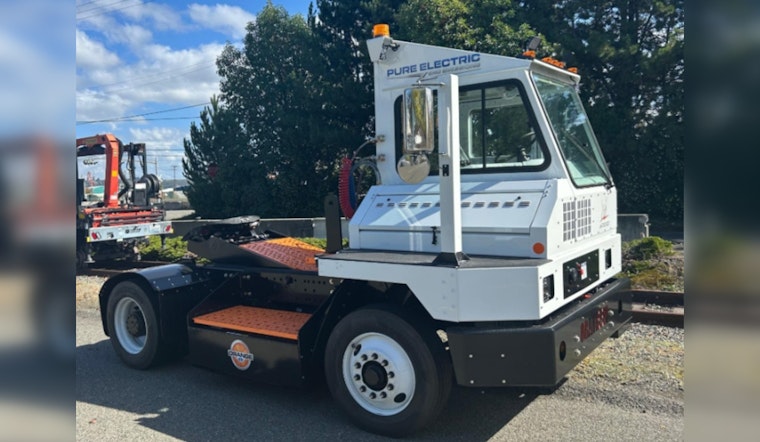
The Washington Department of Ecology has injected a substantial $25 million into the "Rails, Keels, and Wheels" grant program, focusing on nudging operators towards zero-emission vehicles. Aimed at replacing older diesel vehicles—like tugboats, street sweepers, and ambulances—with cleaner alternatives, the program is funded by a pollution settlement with Volkswagen. According to Ecology Director Casey Sixkiller, who spoke about the program's timing and potential, “Diesel exhaust continues to pose significant public health risks in Washington, especially for communities located near industrial operations,” a stated by the Washington State Department of Ecology press release.
These grants help businesses, non-profits, local governments, and independent owners replace older vehicles with more eco-friendly models. Vehicles made before 2009 may qualify for an upgrade. Eligibility and application details are available on the state’s VW enforcement action grants page. Managed by Pete Siefer, this program is part of a $140 million investment to reduce harmful diesel emissions, according to the Washington State Department of Ecology.
Beyond the direct health benefits, this shift promises to stir innovation and investment opportunities. Past initiatives have seen school districts adopt electric buses and cargo ships transition to shore power during port stays, emblematic of the state's broader commitment to cleaner air. "Reducing diesel emissions protects our health, and this program has spurred innovation and investment in areas where, historically, pollution reduction has been really difficult,” says Siefer. This time, they're zeroing in on large diesel engines that leave a hefty carbon footprint, as reported by the Washington State Department of Ecology.
The stakes of these undertakings are substantial when you consider the pollution magnitude of certain diesel vehicles. Ecology provides an unsettling comparison: a single diesel freight switcher can pummel the environment with as much particulate matter as 1,300 semi-trucks idling non-stop. Herein lies the potential for these grants to pave the way for significant air quality gains in Washington. Although precise figures are pending until grant awards are announced, Ecology anticipates the prevention of thousands of tons of particulates from sullying the air we breathe, as per the Washington State Department of Ecology.





