

























































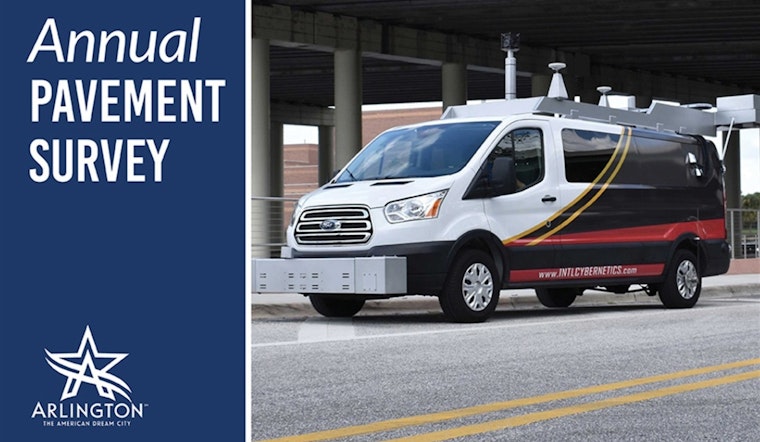
Arlington's recent pavement endeavor has taken a significant stride forward with the completion of its 2025 survey, targeting the streets laid out beneath the southward stretch of SW Green Oaks Boulevard right down to the city's edge. In a project that signals pragmatism and foresight, the Public Works Department contracted a vendor stocked with an armada of precise instruments mounted on their data collection vehicles. These roaming labs, cruising through the arteries of Arlington, have been tasked with gathering the ins and outs of the concrete and asphalt landscapes we traverse daily.
For those looking to understand the intricacies of this civic probe, the Public Works Department's webpage is a repository of insights. The vehicles, charged with this year's survey, charted the level of distress scarring our streets, including cracks and the ruts that mar our commutes, their technology logging details on smoothness and riding comfort. It's a modern method to map what we need to fix to forestall more substantial and costlier infrastructural surgery down the line.
"Using technology to gather and record roadway data allows the City to develop a comprehensive and proactive approach to roadway management," noted the City of Arlington. This approach isn't just about collecting data; it's about acting on it. To that end, Arlington has not been idle, deploying resources to refurbish more than 660 lane miles under its Street Maintenance Program in the fiscal year. The labor is divvied up, with Public Works handling around 570 of those miles and contractors pitching in on the remaining 90.
And it's not just about maintaining what exists. The City is also looking forward, improving 9.7 miles of pavement through Capital Improvement projects. All this work is ultimately geared towards a singular municipality mantra – to Enhance Mobility. But, how does one gauge which street beckons for attention first? Arlington employs a simple color-coded scoring system: Red for the roads in dire need. Yellow signals the need for preventive maintenance. The city's policy has always been to prioritize the red-rated streets to progressively achieve a more balanced network.





