

























































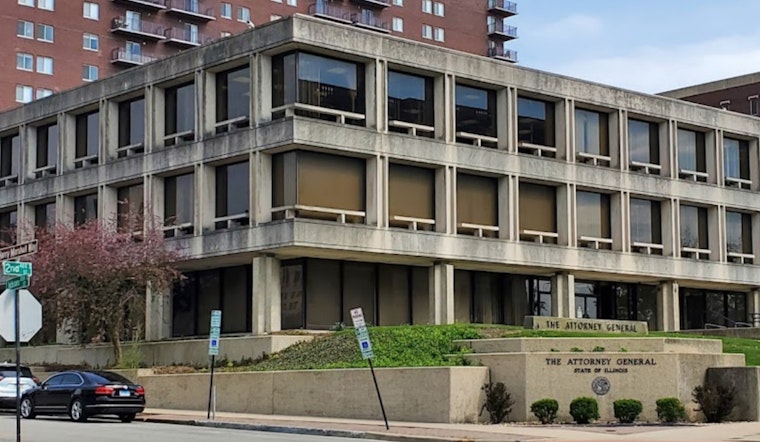
Attorney General Kwame Raoul, in solidarity with a group of 15 other attorneys general, has stepped up to protect the Temporary Protected Status (TPS) for Haitian and Venezuelan immigrants, a move that impacts countless lives here in the United States. In a concerted effort, this coalition has filed an amicus brief with the U.S. Court of Appeals for the 9th Circuit, asking that the earlier court's decision—to block the cancellation of TPS—stands firm. Raoul, representing Illinois in this legal challenge, argues that the termination was not only unlawful but threatens to tear apart the fabric of many communities and families.
Despite the stark humanitarian conditions still prevalent in Haiti and Venezuela, the Trump administration took measures to strip away the TPS designations soon after the Biden administration had put them in place, as reported by the Illinois Attorney General's Office. "Haitians and Venezuelans who hold TPS designations have fled conflicts and environmental disasters in their home countries," Raoul said, "I am the proud son of Haitian immigrants, and I know firsthand that Haitians and Venezuelans make key contributions to their communities and our state and national economies." The abrupt policy reversal left many who have built a life in the U.S. facing uncertainty and the prospect of a return to unstable environments.
The coalition's brief, filed with the appellate court, underscores the dire consequences of revoking TPS for these individuals—many of whom are parents to U.S. citizens. The brief notes that an estimated 54,000 U.S. citizen children and 80,000 U.S. citizen adults live with a Venezuelan TPS holder, while around 87,000 U.S. citizen children and 116,000 U.S. citizen adults live with a Haitian TPS holder. These families now confront the possibility of separation and loss of income necessary for their sustenance.
There is also significant economic fallout to consider, as Raoul and the coalition don't shy away from pointing out. Haitian TPS holders contribute approximately $4.4 billion, and Venezuelan TPS holders add over $11 billion annually to the United States economy. The unexpected revocation of TPS, therefore, would not just affect the immediate lives of these immigrants; however, it could also ripple through the national economy. The legal challenge asserts that terminating TPS was arbitrary, capricious, and contrary to best legal practices, according to the findings of the U.S. District Court for the Northern District of California.
Contributing to the filing of this significant brief are the attorneys general of states from coast to coast, including California, Colorado, Delaware, the District of Columbia, Hawaii, Maine, Maryland, Massachusetts, Minnesota, Nevada, New Jersey, New York, Oregon, Vermont, and Washington. Their collective effort is a testament to the widespread support for TPS holders and the recognition of their invaluable role in American society and economy.





