

























































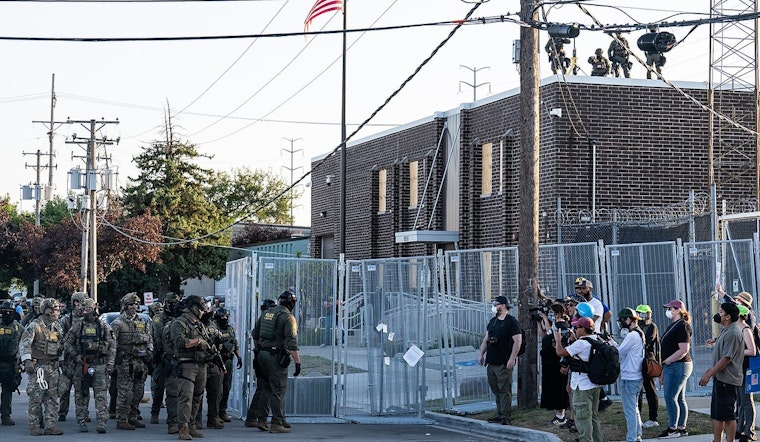
Early Friday in Broadview, tensions escalated as protesters, seeking to push back against U.S. Immigration and Customs Enforcement, clashed with police at the ICE detention facility, resulting in several individuals being detained. The demonstration swelled to its largest numbers seen in recent weeks, spurred into greater fervor by a federal judge's decree that many detainees may soon be released. Some protestors found themselves pushed back by law enforcement, some of whom were in tactical gear, poised with batons and zip ties, their intention clear—to maintain order amidst the outcry.
According to reports, the protest erupted outside its sanctioned bounds, where encounters with Illionois State Police led to 21 arrests, comprising both men and women, and the situation remained fluid with officers sustaining minor injuries during the scuffle, officers aimed to keep control over the restricted area leading to the facility but the large congregation of protestors continued to challenge their hold over the scene.
The cause of the uproar traces back to a resonant legal battle rooted in a 2018 class-action lawsuit alleging ICE's violation of a consent decree by detaining undocumented immigrants without warrants, with neither side yielding to the other's resolve, as reported by FOX News. It was a federal judge's recent decision, mandating the release of detainees without serious criminal histories from the Broadview ICE facility—which was a blow to the ongoing "Operation Midway Blitz"—that poured fuel onto the already smoldering sentiments of community members and activists alike.
In the legal arena, as per ABC7 Chicago, U.S. District Judge Jeffrey Cummings agreed with the ACLU and NIJC attorneys, acknowledging the consent decree's importance and ordered the initial release of 13 people by Friday noon; he further commanded that an additional 615 individuals be placed into "alternatives-to-detention" programs by the following Friday, an action which stirred the Department of Homeland Security to question the safety of these releases.
As advocates from the NIJC and ACLU affirm, the ruling has broad implications beyond community borders in Broadview, potentially affecting a sweeping number of detainees across the nation who, according to these advocates, are primarily non-criminals—an assertion met with palpable concern from those fearing for public safety and demanding stringent immigration enforcement.





.jpg)