

























































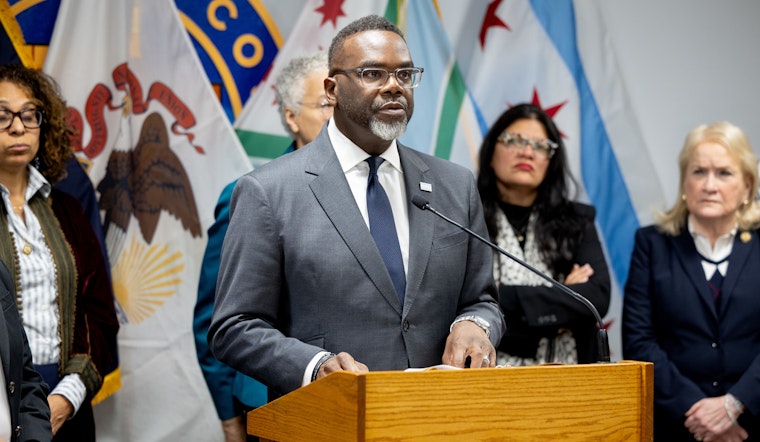
In a bold move against the Trump administration's approach to immigration and social welfare policies, Mayor Brandon Johnson addressed the United Nations Human Rights Council, sharing reports of what he considers human rights violations within Chicago. His participation coincided with testimony from other U.S. municipal officials during the 50th Session of the Working Group for the Universal Periodic Review in Geneva, Switzerland. This forum, held with the support of rights advocacy groups such as the American Civil Liberties Union, provided a platform for officials like Johnson to highlight the federal government's refusal to submit its required Universal Periodic Review report to the council.
Mayor Johnson, speaking at an event streamed live, lamented the cessation of the Supplemental Nutrition Assistance Program (SNAP) benefits in Chicago, "As someone with first-hand experience, I can tell you how humiliating it is when you open the refrigerator and you have nothing to eat. In the wealthiest country in the world, there is no reason why our federal government should allow hundreds of thousands of Chicagoans to go hungry." His comments, as well as the event itself, can be accessed through the city's official website. The Mayor also depicted Chicago as a community suffering under aggressive immigration raids, claiming families have been torn apart and everyday workers have been unfairly targeted.
Johnson wasn't alone in his denunciation. He was joined by officials like Philadelphia District Attorney Larry Krasner and New York City Commission on Human Rights Deputy Commissioner JoAnn Kamuf Ward, who together painted a picture of how local governments are resisting and responding to what they regard as overreaches by federal immigration enforcement. In his address, the Mayor underscored the city's Protecting Chicago Initiative, which aims to educate residents on their Constitutional rights and ensure local law enforcement complies with the city's Welcoming City Ordinance.
Critics of the Trump administration are quick to point out the recent aggressive actions by federal agents in Chicago, citing instances of tear gas being deployed on a children’s Halloween parade, residents being placed in chokeholds, and pepper balls shot at journalists. Johnson described an alarming scene where federal agents zip-tied children and forcibly removed them from their homes at night, and an instance where a teacher at a daycare center was violently detained, all acts he perceives as moral failures on the part of the government.
The gathering of local U.S. officials at the United Nations reflects growing domestic criticism of federal policies and could be a harbinger for a more pronounced international debate over the human rights records of national governments. With increasing scrutiny from the international community, cities like Chicago, under the guidance of leaders like Mayor Johnson, are positioning themselves at the forefront of a defense against what they argue are injustices levied by their own federal government.





