

























































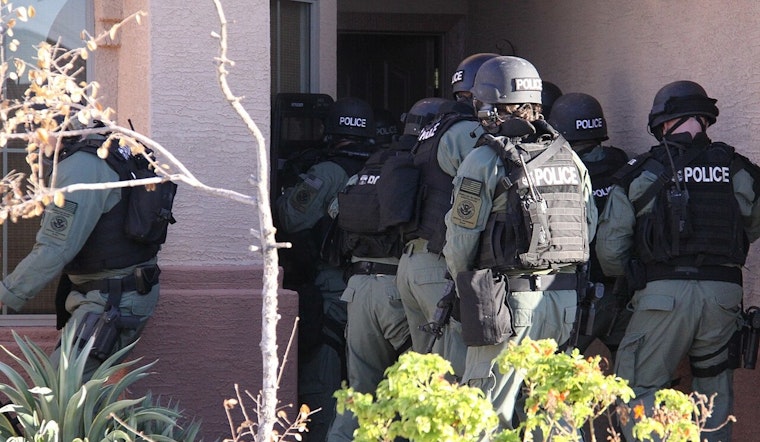
In the wake of a heightened immigration enforcement initiative in Chicago, spanning months and casting an expansive net over the city and its surrounding suburbs, the fallout has become increasingly evident through multiple lawsuits, ongoing investigations, and a pervasive sense of fear among community members. As reported by NBC Chicago, this operation, deemed aggressive and intense, was spearheaded by U.S. Border Patrol commander Gregory Bovino and has resulted in thousands of arrests. Subsequently, many residents of the Democratic stronghold, unenthusiastic about the crackdown to begin with, continue to grapple with anxiety.
Despite Bovino's departure to North Carolina, federal agents carry on with arrests that mark a sustained, though less frequent, presence in Chicago. "I feel a sense of paranoia over when they might be back," Santani Silva, an employee at a vintage store in Pilsen, told NBC Chicago. Following an initial surge of enforcement marked by unmarked SUVs and helicopter support, reports of approximately six daily sightings of immigration agents have replaced what was a previously staggering figure of 142 daily at the operation's peak.
The suburb of Broadview has been notably affected, housing a U.S. Immigration and Customs Enforcement processing center at the center of escalating protests and high-profile police investigations into federal agents' tactics. Such intensity led Broadview's municipal leaders to declare a civil emergency and transition public meetings online—a response to the tumult that has escalated beyond the crackdown itself into bomb threats and violent protests. Mayor Katrina Thompson emphasized the community's resilience, stating, "I will not allow threats of violence or intimidation to disrupt the essential functions of our government," in an interview obtained by NBC Chicago.
There's a notable disparity between the picture painted by federal authorities and the reality of the arrests. Out of 614 immigrants detained recently in the Chicago area, less than 3% were classified as representing "a high public safety risk," according to federal data referenced in court documents cited by TribLive. This disconnect feeds into a series of legal battles and has raised questions about the true intent and results of the immigration crackdown. "None of this has quite added up," Ed Yohnka of the American Civil Liberties Union of Illinois told TribLive. In addition to civil lawsuits, federal prosecutors are reconsidering charges against some bystanders and protesters, including a case involving a woman shot multiple times by a Border Patrol agent.
As these legal and investigatory processes unfold, communities are cautiously navigating a path forward. Entrepreneurs like Andrea Melendez, owner of Pink Flores Bakery and Cafe, report a tentative resurgence in patronage after suffering economic downturns. Still, many, including U.S. citizens like Eleanor Lara, whose spouse is caught in legal limbo, remain inhibited by fear. "We're still sticking home," Lara shared with TribLive, highlighting how the ripple effects of such operations extend far beyond their immediate targets.





