

























































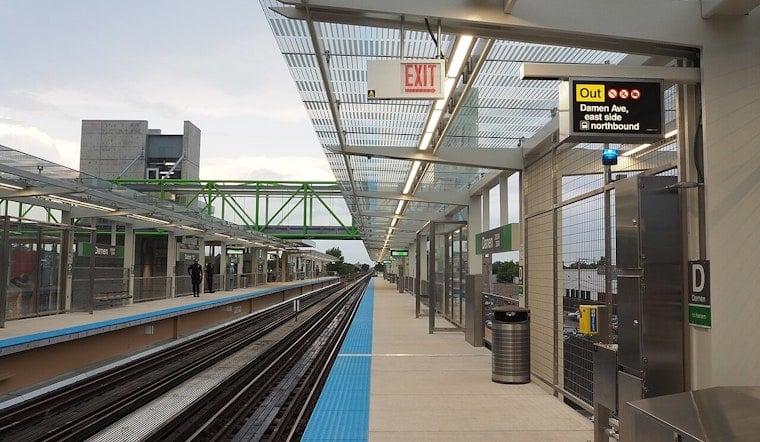
The Near West Side finally has its own 'L' entrance again. The rebuilt Damen Green Line station, a glass-clad, timber-lined stop that reopened in August 2024, restores rail service the neighborhood has been without since the 1940s. More than a simple platform, the station doubles as a civic plaza, complete with a steel-trussed pedestrian bridge that frames skyline views, a large mosaic by Fo Wilson, and a planted green roof. A design profile published today zeroes in on the tricky logistics and low-carbon materials that helped turn the stop into a new neighborhood anchor.
What opened and who it's for
The Damen stop officially opened in August 2024, closing roughly a 1.5-mile gap between the Ashland and California stations and restoring rail access to the Near West Side. According to CTA, the roughly $80 million TIF-funded project was administered by the Chicago Department of Transportation and is operated by the Chicago Transit Authority to serve residents, workers, students at Malcolm X College, and crowds heading to the United Center.
A truss barged upriver and was installed in a weekend
The station's signature pedestrian bridge did not arrive quietly. It came in two massive sections by barge, was offloaded and trucked to a staging area, welded together, then hoisted into place during a brief line cut. As reported by Metropolis Magazine, Perkins&Will senior project manager David Rader said, "We only had one weekend for the install," and crews wrapped up the lift hours ahead of schedule. Project photos and construction notes published by Chicago-L.org capture the barge unloading and truck moves that made the tight weekend operation work.
Design choices aimed at comfort and durability
Perkins&Will's design leans hard on transparency, clear circulation, and low-carbon materials. Riders enter a two-story glass station house with a monumental stair, then move toward dual elevator towers at each platform end. Above them, a nail-laminated timber roof deck creates the warm, wood-lined ceiling that defines the interior. The team prioritized natural ventilation, bird-friendly glazing, and an extensive green roof to cut heat gain and long-term mechanical energy use. Those priorities are detailed on the firm's project page and in technical writeups by the design team at Perkins&Will.
Built to catalyze development
The new station is already being cast as a transit spine for larger redevelopment around the United Center. Chicago YIMBY reported that the Plan Commission approved the so-called 1901 Project master plan, and local coverage has pointed to nearby investments such as the Westhaven Park equitable TOD, which will bring mixed-income apartments and streetscape upgrades. City planners and developers say the combination of a modern, high-capacity stop and large developable parcels gives the Near West Side a new shot at jobs, housing, and street-level retail.
Art and everyday use
A large mosaic by Folayemi "Fo" Wilson greets passengers in the station house, selected through the city's arts process to reflect the West Side's history and aspirations. The CTA highlighted the artwork in its opening statement, and local reporting has noted how plaza programming and a newly installed bike share node are meant to make the stop a civic destination instead of only an event entrance. The idea is to serve both routine riders and the periodic surges that come with United Center events.
Design as a civic turning point
Design principals at Perkins&Will have described the project as "a turning point and neighborhood anchor" that restores access and sets a clear visual identity for the area. Whether that promise translates into long-term ridership growth, equitable job opportunities, and lasting affordability will depend on follow-through from developers and city agencies just as much as on the architecture itself.





,_looking_west_on_opening_day.jpg)