

























































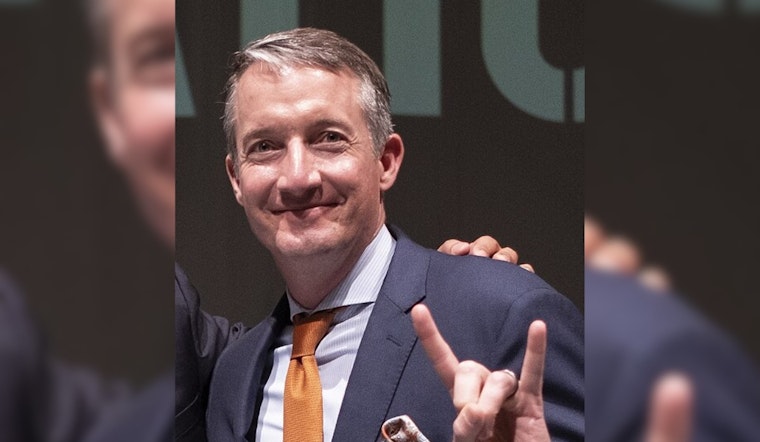
On a Texas Tribune Festival stage last Thursday, former University of Texas president Jay Hartzell told a crowd he likes being a college president but doesn’t love being a politician, summing up a rocky four-year run in Austin. He said stepping away from UT for Southern Methodist University felt like the right call and that life on a private campus has pulled him back toward his academic roots. In the process, he revisited the protests, policy battles, and personnel shakeups that defined his tenure.
Hartzell’s reflections came during a conversation moderated by Evan Smith, according to The Daily Texan, which reported that he tackled the "Eyes of Texas" controversy, the state’s diversity, equity, and inclusion ban, and last year's pro-Palestine demonstrations. He told the audience he regretted UT’s early approach to implementing Senate Bill 17 and the staffing cuts that followed, even as he stood by the decision to block an encampment on the Main Mall. Now that he is leading a private university, Hartzell added, he can say "good luck with that" when public institutions are asked to sign on to a recent federal compact offered to some campuses.
Protests and arrests
Looking back at the 2024 protests, Hartzell said enforcing long-standing campus rules was about keeping students safe and campus operations intact, not about silencing dissent. A Washington Post tally found that 136 people were arrested over two days at UT-Austin during those demonstrations, a law-enforcement response that drew national attention and set off faculty no-confidence actions. For Hartzell, that moment became a practical test of whether administrators should permit encampments, as some other universities had.
SB 17 and staffing changes
In 2023, lawmakers passed Senate Bill 17, which banned many DEI offices and practices at Texas public universities, UPI reported. Campus reporting at the time counted roughly 60 staff terminations tied to restructuring as universities hustled to comply, and Hartzell told the festival audience he wishes that rollout had been handled differently. He cast those job losses as an unfortunate side effect of a law that required campuses to rethink overlapping roles and offices.
From UT to SMU
Hartzell accepted the SMU presidency earlier this year, a move he says has buffered him from some of the state-driven changes now hitting public campuses, according to The Dallas Morning News. Onstage at the festival, he stressed the gulf between the political crossfire he faced in Austin and the day-to-day work of running a university, which he said is what actually energizes him. The shift, in his telling, has let him refocus on academics without the same level of legislative interference.
Asked about newer state measures reshaping faculty governance, Hartzell said he had not read the language of a recent bill because it no longer applies to him at a private institution. His comments landed at a moment when Texas higher-education policy is actively remapping the relationships among legislators, regents, and campus leaders, as those decisions continue to ripple through faculty ranks and hiring. For now, Hartzell said, he would rather tackle problems inside a campus gate than spend his time courting votes.





