

























































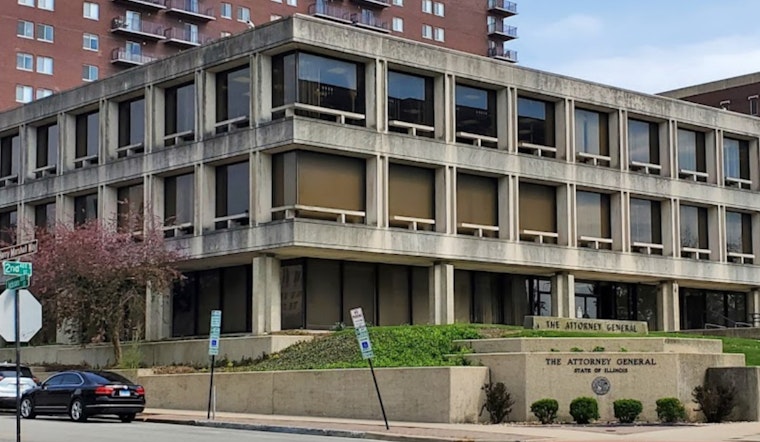
Illinois Attorney General Kwame Raoul has recently joined forces with a group of attorneys general from 16 states to file a legal brief in opposition to the federal government's attempt to obtain the private voter data of California residents. The case, titled U.S. v. Shirley Weber, et al., has become a battleground for privacy rights with implications that could affect the handling of sensitive voter information nationwide. Raoul and his colleagues argue that the U.S. Department of Justice's demands are both overreaching and legally unfounded.
The coalition, in a move to safeguard voter privacy, contends that the federal government's demands are part of a larger initiative to create a database loaded with personal information of millions. This database would include details such as Social Security numbers and driver's license data. Raoul, taking a stand to protect constitutional rights, stated, "The right to vote is one of the most fundamental rights we have as Americans, and I will continue to join with other attorneys general to protect voters' constitutional right to vote." This comment highlights the collective sentiment of the attorneys general that the federal initiative not only exceeds its authority but also threatens voter privacy. According to the Illinois Attorney General's office, these demands have been made to a total of 42 states, with legal actions initiated against seven beyond California.
The brief filed by Raoul and the coalition states that the Department of Justice's demands overstep their bounds under several federal statutes that it cites, including the Help America Vote Act, the National Voter Registration Act, and the Civil Rights Act of 1960. The argument suggests that not one of these laws authorizes the expansive collection of sensitive voter info. The coalition's brief further insists that the Civil Rights Act's authority to inspect records was specifically designed to investigate racial discrimination in voting, not to hinder it.
Moreover, the brief criticizes the federal government for failing to abide by the Privacy Act of 1974, which mandates strict adherence to procedures before collecting personal information and sharply limits the scope of data collection and sharing. Raoul, in a testament to his dedication to privacy, earlier this year also worked with other attorneys general to successfully prevent unauthorized access to personal data by Elon Musk's "Department of Government Efficiency." The brief underscores that the Privacy Act explicitly prohibits the retention of records that describe how individuals choose to freely exercise their First Amendment rights, unless explicitly authorized by statute.
The multi-state legal team backing Raoul includes attorneys general from Arizona, Colorado, Delaware, Hawaii, Maine, Maryland, Michigan, Minnesota, New Jersey, New Mexico, New York, Oregon, Rhode Island, Vermont, and Washington. These legal leaders are presenting a united front against federal overreach and in staunch defense of citizens' rights. Their collective action underscores a commitment to standing in the way of what they view as illegal demands and a breach of voters' trust.





