

























































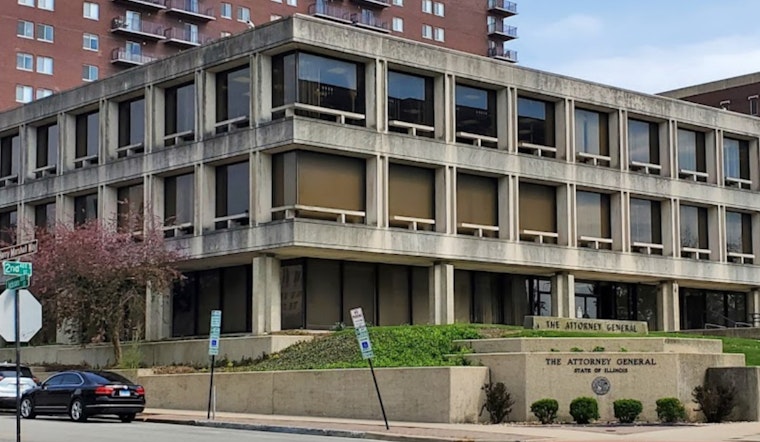
In a bold move to safeguard food assistance for thousands, Illinois Attorney General Kwame Raoul has spearheaded a lawsuit alongside 21 other attorneys general against the U.S. Department of Agriculture (USDA). This coalition is pushing back against new federal guidance that allegedly misinterprets the eligibility of certain immigrant groups for the Supplemental Nutrition Assistance Program (SNAP), potentially stripping away crucial support from eligible families, including permanent residents who were granted asylum or admitted as refugees.
"The SNAP program is the country's most important anti-hunger program, providing access to food for millions of families while supporting local grocers and merchants who are critical to our state's economy," Raoul said in a statement. The lawsuit specifically targets changes initiated under the "One Big Beautiful Bill", which purportedly misconstrues statutory eligibility criteria. Moreover, Raoul and the other attorneys general argue that the USDA's guidance, issued on Oct. 31, accelerates the timetable states are given to adapt to new rules, placing states under threat of severe financial penalties for noncompliance. Last week, Raoul's coalition formally requested the USDA to either clarify its position or retract the contentious memo. Despite these efforts, the USDA has yet to respond.
According to the lawsuit filed by the attorneys general, their goal is to prevent the injustices poised to erupt from the USDA's latest guidance. They claim it contradicts federal law and arbitrarily enforces penalties on states without proper notice. The guidance suggests that states had only until Nov. 1 to comply, giving no reasonable window for reprogramming systems or retraining staff as traditionally allowed. The attorneys general’s rally points to the USDA's own regulations, which stipulate a 120-day grace period post-issuance for such transitions, a detail the USDA appears to have neglected in their recent memo.
The swift upheaval imposed by the USDA's guidance endangers not just the stability of food assistance for families but also the reliability of states to manage such programs without facing punitive fiscal repercussions. The coalition of attorneys general has urged the court to annul the USDA's guidance and halt its execution, thereby protecting families dependent on SNAP. "This will create widespread confusion for families," Raoul remarked, "increase the risk of wrongful benefit terminations, erode public trust, and place states in an untenable situation where they must either violate federal law or accept severe financial liability."
Backing Raoul in this legal contest are attorneys general from California, Colorado, Connecticut, Delaware, the District of Columbia, Hawaii, Maine, Maryland, Massachusetts, Michigan, Minnesota, Nevada, New Jersey, New Mexico, New York, North Carolina, Oregon, Rhode Island, Vermont, Washington, and Wisconsin. As the group forges ahead, they embody a collective resistance to policies that threaten to undercut the well-being of vulnerable populations relying on the nation’s chief hunger-prevention program. More developments are bound to unfold as the dispute over SNAP program eligibility continues.





