

























































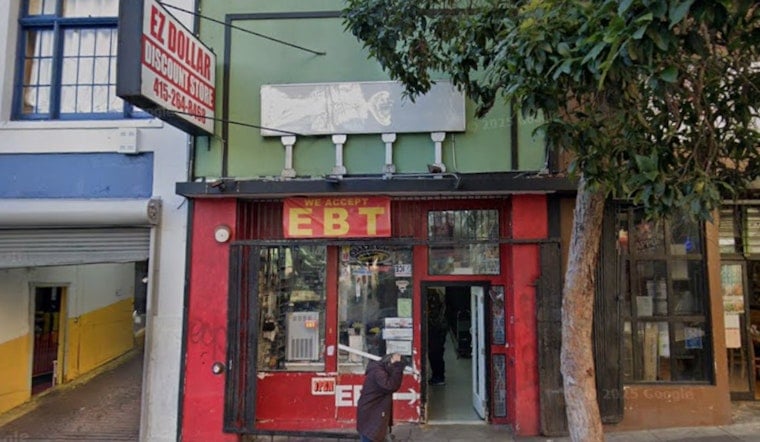
Supervisor Matt Dorsey is moving to bring the Tenderloin’s midnight corner store curfew to SoMa, leaning on new academic research that links the rule to a sharp drop in late-night drug incidents in 2024. The proposal would launch an 18-month pilot that singles out convenience stores, not bars or restaurants, and it is already drawing fire from merchants who say the city is balancing its drug strategy on their backs.
Study Finds Big Drop In Nighttime Drug Incidents
The curfew’s key talking point comes from a study published on November 15 in the peer-reviewed Security Journal. Researchers from the University of Sassari analyzed data from the San Francisco Police Department for the first nine months of the Tenderloin curfew. They estimated a 56% reduction in drug-related incidents during the midnight to 5 a.m. hours.
The paper reports no statistically significant increase in drug-related incidents in neighboring areas during those curfew hours. At the same time, the authors flag preliminary evidence that some drug activity may have shifted into SoMa during non-curfew hours, a possible displacement effect they say needs more study.
Dorsey Plans An 18 Month Pilot For SoMa
Dorsey now wants to test a similar midnight to 5 a.m. restriction in parts of District 6, which includes a well-known drug market on Sixth Street, according to The San Francisco Standard. His office has been meeting with SoMa merchants this month, pitching an 18-month pilot that would carve out exemptions for bars and restaurants while focusing on late-night convenience stores.
Merchants Say The Pain Falls On Small Businesses
Business groups and store owners counter that the curfew mostly clips already stretched neighborhood shops. Miriam Zouzounis of the Neighborhood Business Alliance has described the original Tenderloin rule as “collective punishment,” arguing that compliant operators are paying for broader public safety failures. Fadhl Radman, who owns Radman’s Produce Market in the Tenderloin, told The San Francisco Standard that he has not seen street conditions improve under the curfew. For background on his shop, see an earlier profile, as reported by Hoodline.
Police Data And The Academic Take
San Francisco police data presented to the Board of Supervisors show an 18% decrease in calls for service and a nearly 13% decline in total reported crimes in the Tenderloin during curfew hours, as reported by ABC7/KGO. The Security Journal study then applied causal time series modeling to those same police figures to isolate drug-related incidents and produce its 56% estimate.
The authors caution that the results should be weighed against economic impacts on businesses and the intensity of enforcement, noting that the curfew is one tool in a larger policy mix rather than a standalone fix.
Enforcement And Legal Tools
The Board of Supervisors approved the Tenderloin curfew as a two-year pilot. Under the city’s summary, stores that operate during restricted hours can face administrative citations of up to $1,000 per hour, with repeat violators potentially facing civil actions. The City and County of San Francisco outlines the fine structure and exemptions.
Parallel to the curfew, city attorneys have filed public nuisance lawsuits seeking to close stores allegedly facilitating illegal activity, according to the San Francisco Chronicle. The administration is also rolling out other measures, including a planned sobering center at 444 Sixth St., which the San Francisco Chronicle reports is intended to pair enforcement with treatment options.
Tradeoffs And What To Watch
Supporters of the Tenderloin curfew say it has led to cleaner sidewalks and fewer late-night gatherings clustered around corner stores, a selling point several local officials highlighted when the idea first gained traction at City Hall, according to KQED. Critics argue that the rule offloads a citywide public safety problem onto small merchants and is more likely to shuffle drug activity around than eliminate it.
Those competing narratives are likely to drive the next round of fights over where any SoMa curfew lines are drawn on the map, which businesses qualify for exemptions, and what metrics the city uses to determine whether the pilot succeeds or fails.
What Comes Next
Dorsey still needs to define the SoMa curfew boundaries, formally introduce the ordinance, and secure enough votes from the Board of Supervisors before any changes take effect on the ground. If the proposal advances, public hearings and an impact review are expected.
On one point, the study’s authors and many local advocates find common ground: curfews alone will not solve San Francisco’s drug crisis. How the city pairs any new restrictions with housing, treatment, and longer-term investments will likely matter as much to residents and businesses as the raw crime numbers.



