

























































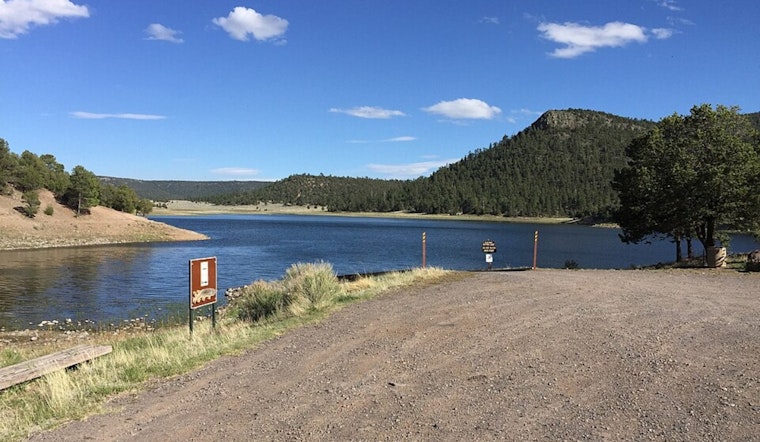
Quemado Lake and adjoining U.S. Forest Service lands in western New Mexico are closed after state testing found elevated concentrations of toxin‑producing blue‑green algae. The Gila National Forest has posted an area closure that blocks access to campgrounds, day‑use areas, and lakeshore trails until officials clear the water. Visitors and pet owners are being warned that the lake could pose an immediate health risk.
Samples collected by the New Mexico Environment Department’s Surface Water Quality Bureau showed very high levels of microcystins, prompting a danger advisory that recommends closing the area to protect public health, according to the New Mexico Environment Department. The release says the water is unsafe for drinking or any contact and urges anyone who suspects an algae‑related illness to call the New Mexico Poison Information Center at 800‑222‑1222; pet owners with animal illness should call 888‑426‑4435 or the Pet Poison Helpline at 855‑764‑7661. NMED said it will continue sampling and will lift warnings only when tests show the lake is safe.
The Gila National Forest issued a public‑health and safety area closure prohibiting public access to Quemado Lake and National Forest System lands south of Quemado Lake Road (Forest Road 13), the Forest Service said. Local reporting and Forest Service alerts list the Cove Day Use Area, Juniper Campground, El Caso campgrounds 1–3, and several lake‑access and fishing trails among those included in the closure. Officials say the closure is in place to reduce exposure while state and federal agencies monitor toxin levels.
The advisory and closure mean the water is considered unsafe for swimming, wading, boating, paddling, water skiing, fishing, and drinking; officials specifically warn against letting dogs play in or drink the water. These activity restrictions were called out in state guidance and by local coverage of the closure, which urged people to avoid the shoreline and visible scum or mats of algae. Harmful algal blooms form when cyanobacteria multiply in warm, stagnant, nutrient‑rich water and can produce toxins such as microcystins that are harmful to humans and animals, the EPA and public‑health agencies note. Climate trends and heavy rainfall events that increase nutrient runoff can lengthen and intensify bloom seasons, making advisories more frequent in some areas.
If you visited Quemado Lake recently and developed symptoms such as stomach pain, vomiting, skin or eye irritation, or respiratory trouble, contact a healthcare provider and mention possible algae exposure. Rinse thoroughly with clean water after any contact. Do not eat fish from the affected waters unless fillets are rinsed and cooked thoroughly, and keep children and pets away from the shoreline until officials lift the advisory.
The Forest Service’s closure orders carry enforcement authority: violations of National Forest closure orders can be punishable by fines or other penalties, as outlined in the Forest Service’s occupancy and use prohibitions. The agency asks visitors to respect posted signs and contact the Gila National Forest supervisor’s office for questions about the order and enforcement, as reported by KTSM.




.jpg)