

























































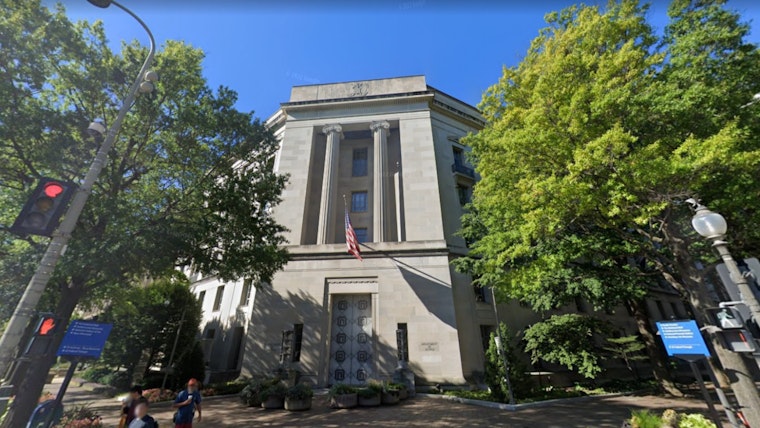
The Trump administration has opened a fresh front in its fight with California, filing a federal lawsuit in Sacramento on Thursday that takes direct aim at the state's tuition breaks and financial aid for undocumented college students. The Justice Department is asking a judge to block provisions tied to AB 540 and the California Dream Act, and it names Gov. Gavin Newsom, along with the state's public university systems, as defendants. California officials quickly criticized the move as a nakedly political maneuver and vowed to defend the policies in court.
What's in the complaint
In a press release, the Justice Department said the complaint, filed in the Eastern District of California, asks the court to declare unlawful and halt enforcement of statutes that require public colleges to offer in-state tuition to residents regardless of lawful immigration status. It also seeks to block portions of the California Dream Act that provide state-funded scholarships and subsidized loans to people who are not lawfully present, according to the Justice Department.
The federal law at issue
The DOJ filing leans on a federal statute that bars states from granting certain postsecondary “benefits” to people who are not lawfully present unless those same benefits are available to U.S. citizens regardless of where they live. That prohibition appears at 8 U.S.C. § 1623, as summarized by the Legal Information Institute. Legal scholars have long debated whether the term “benefits” encompasses cheaper in-state tuition and lower costs, and lower courts in different states have reached conflicting conclusions.
Who does the suit name
The complaint does not just target the statutes. It also names top state and higher-education officials as defendants, including Gov. Gavin Newsom, California Attorney General Rob Bonta, the Regents of the University of California, the Cal State Board of Trustees, and the Board of Governors of the California Community Colleges, according to reporting by The Sacramento Bee. The Justice Department is asking the court to bar both the state and its public campuses from enforcing the challenged provisions.
How many students could be affected
The stakes are sizable for California campuses. Estimates suggest the state has tens of thousands of students who could feel the impact if the rules change, including roughly 2,000 to 4,000 undocumented undergraduates at UC, about 9,500 at CSU, and as many as 70,000 in the community college system, according to the Los Angeles Times. The case focuses on Assembly Bill 540 and sections of the California Dream Act that allow certain high school graduates to qualify for resident tuition or state financial aid despite their immigration status.
State and campus reaction
Newsom's office labeled the lawsuit “meritless” and sharpened the political edge, with a spokesperson saying, “the DOJ has now filed three meritless, politically motivated lawsuits against California in a single week. Good luck, Trump. We'll see you in court,” as reported by the Los Angeles Times. UC leaders stated that their campuses adhere to state and federal eligibility rules. CSU and the state attorney general's office declined to comment in early coverage.
A coordinated federal push
The Justice Department cast the California lawsuit as one part of a broader enforcement campaign, pointing to similar challenges it has brought in Texas, Kentucky, Illinois, Oklahoma, and Minnesota, according to the Justice Department. In Texas, a federal challenge led to a quick settlement that effectively ended that state's in-state tuition benefit for undocumented students, a development reported in coverage of how Texas agreed to end in-state tuition for undocumented students, per Hoodline.
Legal implications
The core legal fight will be over whether reduced in-state tuition and state-funded scholarships count as a postsecondary “benefit” under 8 U.S.C. § 1623, a statute that, on its face, bars eligibility for such benefits based on residence for people who are not lawfully present, according to the Legal Information Institute. California's Supreme Court upheld AB 540 in 2010, concluding that the tuition exemption was tied to high school attendance rather than traditional residency rules, a decision highlighted at the time by groups including the ACLU of Southern California. That history is likely to loom large as federal judges pick apart California's framework.
The case will proceed in the Sacramento federal courthouse, with observers anticipating brisk motion practice and, ultimately, appeals. For undocumented students, their advocates and administrators, who juggle campus budgets, the lawsuit could sharply redefine who qualifies for resident tuition and state aid across California's public colleges and universities.





