

























































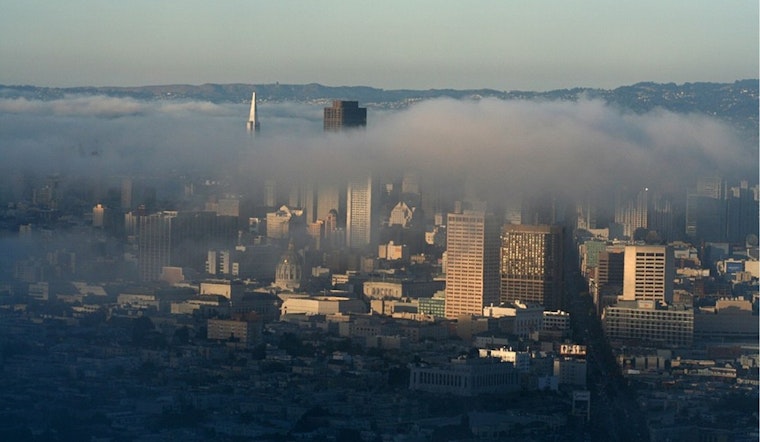
The Bay Area weather remains uneventful with a persistence of benign conditions as no precipitation is expected through the next seven days, according to the National Weather Service in San Francisco. Patchy Tule Fog continues to affect visibility in the North Bay and interior East Bay valleys, with Friday's Cold Weather Advisory for parts of the North Bay rescinded as stratus clouds brought an unexpected increase in temperatures.
Today, the areas swathed in fog and clouds are set for a slow burn-off lasting through late morning. While the rest of the Bay Area may not be as chilly as it was yesterday, the region is not exactly warming up either, with predictions of "Upper 50s to 60s" for the colder areas, as identified by the NWS San Francisco. The slight temperature increase is attributed to "some weak offshore flow" that's mitigating the frosty bite, as the stratus and Tule fog continue to play a role in the area's temperature dynamics, settling particularly in the N and E Bay.
Looking ahead, the NWS San Francisco forecasts a continuing dominance of high pressure over California that suggests a warming trend with "interior highs reaching the upper 60s to mid 70s" as peak warmth is expected between Wednesday and Friday. Prospects for rain remain slim, with only a few weak systems passing well to the north, possibly stirring up some drizzle over the coastal waters.
As for aviation impacts, Tule fog disruptions are anticipated to extend into tonight for the North Bay and Bay Area terminals but with no other widespread weather effects predicted, it seems that the familiar, repetitive pattern the Bay Area has been experiencing will stay the course throughout the TAF period, the NWS detailed its expectations for "another round of Tule fog again tonight for North Bay and Bay Area terminals." In marine conditions, the NWS San Francisco has flagged "fresh northwesterly winds persist through this weekend and into the middle of next week" with seas maintaining wave heights 6 to 8 feet across the outer waters this weekend, and a new long-period northwesterly swell is on the horizon for Wednesday.



