

























































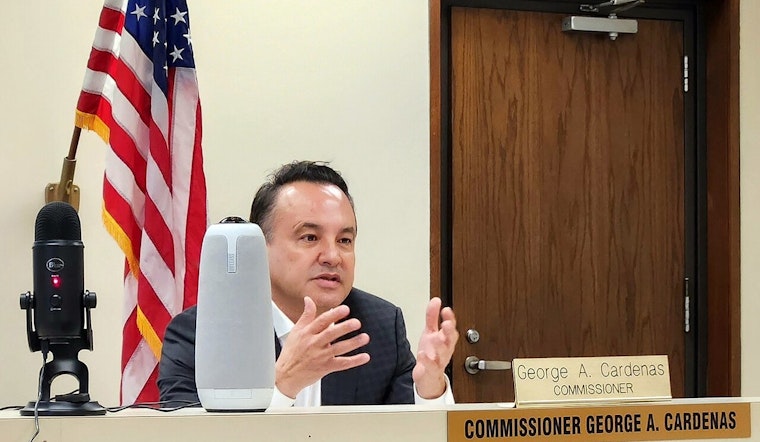
George Cardenas is scrambling to hang on to his spot in the March Democratic primary as a bruising objections fight over his nominating petitions threatens to knock him off the ballot. After an objections hearing flagged dozens of petition pages and sliced away signatures, his campaign was left short of the minimum needed to qualify. At the heart of the dispute: how many repeated names and alleged irregularities should actually be tossed. A hearing officer will weigh in with a recommendation to the county electoral board next week, and if enough objections stick, Cardenas could be scrubbed from the ballot altogether.
Cardenas’ team initially filed close to 12,000 signatures, but county staff validated far fewer in a first review, leaving him about 273 signatures short of the 4,941 required to make the March ballot, according to the Chicago Tribune. His lawyers fired back with a meticulous, line-by-line comparison of the petitions and submitted 549 affidavits from voters swearing their signatures were legitimate. Those dueling spreadsheets and sworn statements have now set up a slow, granular recheck of page after page of petition sheets.
Duplicate Pages And The Circulator In The Hot Seat
The most hotly contested sheets were circulated by Carlos Sanchez, a Board of Review analyst who doubled as Cardenas’ top petition gatherer. His stacks included multiple signatures that show up more than once on different pages. An attorney for challenger Juanita Irizarry argued those repeats were no accident, calling them evidence of an “intent to defraud the Clerk by submitting signatures that were intentionally repeated.” Cardenas’ side countered that any duplicates should be removed, but that they do not prove a broader scheme to game the system.
Hearing officer Laura Jacksack ruled that duplicate signatures will be struck, while other challenged names remain under the microscope. The hearing is set to resume at 9 a.m. Monday, after which Jacksack will send her recommendation to the county electoral board, as reported by AOL.
What The Board Of Review Does And Why This Race Matters
The Cook County Board of Review hears property-tax appeals and can change assessments for both homeowners and businesses - a core function that translates into real money for taxpayers and developers, according to the Cook County Board of Review. That kind of authority makes each commissioner’s seat a coveted political perch. The office and its staff have also drawn scrutiny in recent years over hiring practices and potential conflicts of interest, which critics say only heightens the stakes of this petition battle and the way campaigns organize their field operations.
In that context, the Cardenas challenge is not just a technical fight over signatures. It is also functioning as a stress test for how seriously county-level campaigns handle basic ballot mechanics and vet the people they rely on to gather signatures in the first place.
Legal Options And What Comes Next
Under Illinois election law, the electoral board must issue written findings, and its decision can be reviewed in court under the Election Code. That means any candidate knocked off the ballot can head to court to try to get back on. The process is laid out in provisions that require the board to transmit its rulings, preserve nomination papers, and give aggrieved candidates a short window to seek judicial review, per the Illinois Election Code. That legal route is a familiar one in tight or precedent-setting petition fights across the state.
For the moment, both sides are gearing up for more testimony and document comparisons as the hearing resumes. If Cardenas is ultimately removed from the ballot, Irizarry would be the only Democrat listed in March and the prohibitive favorite heading into the fall general election, according to reporting on the race and her endorsements. The county electoral board is aiming to wrap up its work by Friday after receiving Jacksack’s recommendation.





