

























































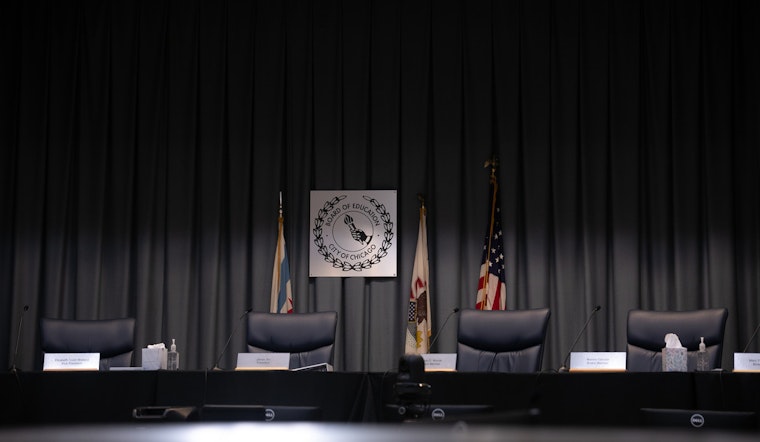
A new poll says most Chicagoans are flying blind on one of the biggest school shakeups in decades. Two out of three city residents were unaware that the Chicago Board of Education is set to become fully elected in 2027, and only about one in ten could name their current school board member, despite civic groups and would-be candidates gearing up for the next round of races.
The survey, conducted Sept. 16 to 29 by NORC at the University of Chicago and commissioned by Kids First Chicago, sampled 1,361 adults across the city. Just 32% of respondents knew the board would become a fully elected 21-member body in 2027, while 66% said they had no idea. Only 10% could name their existing representative, according to Kids First Chicago.
Experts urge earlier bilingual outreach
“There’s clearly some steps we need to take to make sure that folks are aware that the transition is happening,” Hal Woods, chief of policy at Kids First, told reporters.
Micaelan Valesky Gasperich, the group’s data science manager, called for “straightforward, plain bilingual outreach,” while Northwestern political scientist Jaime Dominguez noted that outreach to Latino communities often starts too close to Election Day and should begin much earlier. Those concerns were highlighted in reporting by WBEZ.
What changed in 2024
Chicago held its first school board elections in 2024 after decades of mayoral control, and the board expanded from seven to 21 members, a major reset of local education politics. That inaugural cycle drew heavy outside spending and a crowded field of hopefuls, and nearly 80% of submitted ballots included a vote for a school board candidate, the Chicago Sun-Times reported.
Who is least likely to know
The Kids First poll found that younger adults and Latino residents were the least likely to be aware of the coming change, a troubling gap given that Latino students now make up the largest demographic in Chicago Public Schools. To close that gap, Kids First recommends plain-language bilingual materials and outreach that meets people where they already get information, including social platforms and trusted community groups, according to Kids First Chicago.
Next dates and the politics ahead
Candidates can start gathering signatures to get on the ballot in late February, and observers expect the coming contests to feature candidates aligned with the Chicago Teachers Union, charter school advocates, critics of the union, and independents. How effectively the city and civic organizations educate younger and Latino voters is likely to shape turnout and who ultimately wins seats on the fully elected board in 2027, as local reporting has noted. WBEZ and other outlets have tracked these developments.
The poll is a blunt reminder that changing how power is structured does not mean much if residents do not understand what is happening. Community leaders say early, plain-language and bilingual education campaigns are still the clearest path to closing the awareness gap before the next filing period and election cycle hits.





