

























































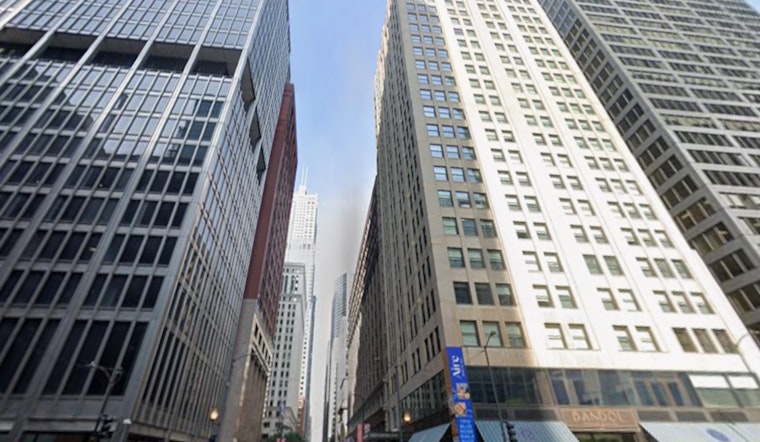
New financial modeling from a team led by Nixon Peabody, with design input from Gensler and AECOM, suggests a small crop of Loop office towers might successfully flip to apartments without any up‑front public subsidies, but only if the numbers line up with almost surgical precision. The group zeroed in on a shortlist of distressed buildings and ran detailed hard‑cost and yield projections that show some conversions can work if buyers pick up the properties at sharply discounted prices or secure historic tax credits. All of this is unfolding as downtown vacancies hit uncomfortable highs and the city pours its own money-backed energy into office-to-residential projects.
Pressure in the central business district is hard to miss. Office vacancy in the core has climbed to roughly 28 percent in recent quarters, creating a surprisingly deep bench of potential conversion candidates, according to Propmodo. At the same time, the city’s LaSalle Street conversions are leaning heavily on public help. Propmodo notes that the initiative and related approvals have unlocked about $321 million in TIF commitments that are expected to leverage nearly $900 million in private conversion work and roughly 1,765 units. That mix of high vacancy and very active subsidy programs is exactly what makes both public-backed and purely private conversions viable paths for different owners.
The study team narrowed an initial list down to three test cases, at 332 S. Michigan Ave., 20 S. Clark St., and 300 S. Wacker Dr., then modeled multiple conversion scenarios that blended residential, partial hospitality and historic tax credit strategies. Their findings: 332 S. Michigan could produce about 350 apartments, with more efficient layouts on the upper floors, and post an 8.79% yield on cost if historic tax credits are part of the capital stack. At 20 S. Clark, a hybrid hotel and residential concept, capped at 252 apartments to avoid triggering affordable housing requirements, penciled out at roughly a 10.5% yield on cost. At 300 S. Wacker, where nearly half the building is vacant, and a lender takeover has slashed the ownership basis, the team found a slimmer 7.12% yield on cost without subsidies, although the deal strengthens on paper if the property gains landmark status and associated credits. The analysis and underwriting were detailed in a report produced with Nixon Peabody and summarized by Bisnow.
City Programs And Subsidies Still Lead
Chicago is hardly sitting out the office conversion wave. The city’s targeted LaSalle Street initiative requires a substantial affordable housing component and steers TIF dollars into several adaptive reuse projects, according to local coverage. Block Club Chicago reports that the LaSalle proposals must set aside about 30 percent of units as affordable and notes that 79 W. Monroe has already broken ground as the program’s first shovel-ready office-to-apartments conversion. These public moves help explain why many of the biggest Loop redevelopments, especially on LaSalle, are moving forward with explicit city backing rather than purely private balance sheets.
Design Workarounds And Code Constraints
Even when the pro forma looks promising, architects and developers warn that building quirks, exterior work, and city rules can wreck a tidy spreadsheet in a hurry. Industry players told Propmodo that conversions are wrestling with hefty retrofit costs, delicate and often expensive landmark restoration issues, and regulations that can require deeply subsidized affordable units. Any of those can be enough to knock an unsubsidized deal out of contention. That reality is why many teams are leaning into hybrid plans, such as partial hotel programs or larger amenity packages, and aggressively pursuing historic tax credits to tip borderline projects into feasible territory.
Industry Takeaways
“Chicago is ripe with opportunities for excellent office-to-residential conversions,” Jennifer Schultz, a Nixon Peabody partner who led the study effort, told Bisnow. Her team’s modeling makes a pointed distinction. The projects that can get across the finish line without city money tend to be highly specific one-offs, where an investor buys a significantly written-down asset, layers in tax credits, or carefully combines uses to stay under certain regulatory triggers. What the data does not support is a sweeping, copy-and-paste solution that magically turns the entire Loop into housing without subsidies. There is an opportunity here, especially for opportunistic buyers, but not a simple bailout for the broader downtown office market.
Legal And Policy Notes
City approvals, landmark designations, and TIF votes are the levers that will determine whether private conversion models can gain real traction. Reporting from Chicago Construction News shows that City Council actions have advanced TIF packages for the Clark Adams and Field Building conversions, with support in the tens of millions of dollars that significantly reshape project feasibility. Those approvals also reset the playing field. Projects that pair with public money can shoulder deeper affordability requirements and higher retrofit costs, while purely private projects generally try to sidestep those burdens.
What comes next will hinge on final City Council appropriations, landmark or national register decisions that unlock historic credits, and how lenders handle distressed Loop assets. The Field Building and other flagship projects already have design teams in place and approvals from the Planning and Development Department’s Project Review Committee, and developers say those moves, along with the outcome of tax credit underwriting, will determine whether a meaningful number of additional conversions can proceed without city subsidies. Riverside Investment & Development outlines the current Field Building plan and timeline.





