

























































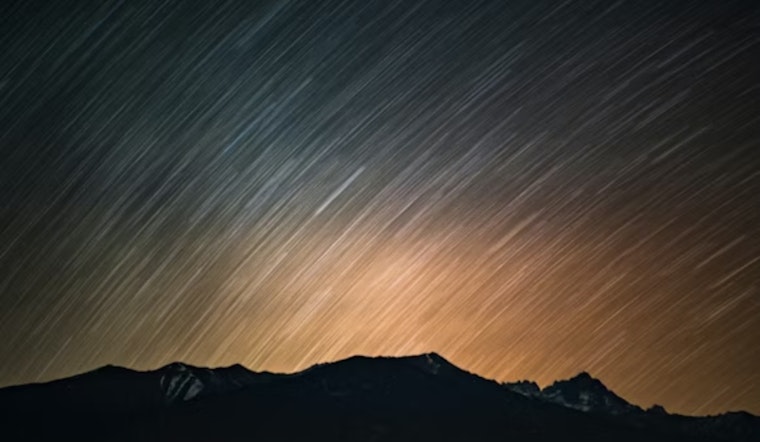
Anyone who bothered to look up in San Francisco late Saturday into early Sunday was rewarded with a legit sky show. The annual Geminid meteor shower fired off bright “shooting stars” over the city’s hills and bridges, with some viewers on rooftops and in cars reporting long, colorful streaks that cut through the glow of the urban lights.
WeatherBug Captured The Display Over The Skyline
A short video posted Monday by WeatherBug stitches together multiple meteors blazing over the San Francisco skyline, with sharp white trails sliding past dark ridgelines and the water below. The clip, titled “Geminid Meteor Shower Lights Up San Francisco,” appeared on WeatherBug’s video feed and has since made the rounds across social platforms.
What The Geminids Are
The Geminids roll through every December, when Earth plows through debris left behind by the asteroid 3200 Phaethon. Under truly dark, clear skies, the shower can crank out anything from a few dozen to more than a hundred meteors per hour. The American Meteor Society lays out the shower’s timing, while Space.com notes that Geminid meteors tend to be bright and relatively slow, which makes them easier to follow with the naked eye.
Bay Area Viewing Hinged On Fog And Elevation
Across the Bay Area, viewing conditions were a bit of a grab bag. Forecasters warned that a returning marine layer and patches of fog could wipe out the show for low-lying neighborhoods, while hills and higher ridges stood a much better chance at clear skies. The San Francisco Chronicle quoted astronomers at the Chabot Space & Science Center who said a late moonrise helped visibility this year, and that observatory decks and hilltops were prime real estate for anyone willing to drive above the fog.
Where To Watch And What To Bring
Astronomers and local outlets steered viewers toward dark, elevated spots and urged a bit of patience, suggesting people give their eyes 20 to 30 minutes to adjust to the night. Even from some suburban and city locations, the brightest Geminid fireballs still cut through. SFGATE reminded sky watchers that telescopes and binoculars actually shrink the slice of sky you can see, so a reclining chair, a blanket and plenty of warm layers are often the smarter gear list.
Tips For Watching And Photographing
For anyone trying to capture the meteors on camera, photographers recommend a wide-angle lens, a solid tripod and long exposures, then letting the sky do the work. Otherwise, the best move is to lie back and watch as much of the sky as possible. The American Meteor Society advises avoiding bright phone screens and facing the eastern half of the sky to improve the odds of catching Geminid streaks.




