

























































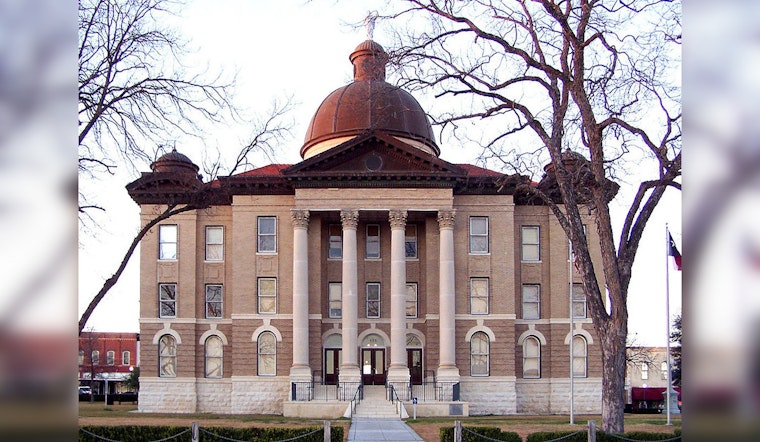
Hays County's Mental Health Court (MHC) has received a financial boost, courtesy of the Texas Bar Foundation. In a recent announcement, the MHC has been awarded a $10,000 grant aimed at assisting the court's expungement services. This grant was accepted by the Hays County Commissioners Court on Tuesday, Dec. 2, a critical infusion of funds to further enable the rehabilitation and reintegration of individuals within Hays County.
The court, already noted for its proactive approach to individuals grappling with mental health and substance use issues, can now begin to offer expanded legal aid. According to Kaimi Mattila, the MHC Administrator, the grant is set to be game-changing. "This grant allows our graduates to move forward with their lives after completing the program, without their criminal background creating barriers to housing and employment," Mattila said, according to the Hays County official website. Notably, the funds will cover specialized training for attorneys in expungement law and provide compensation for their efforts—a necessary move to substantially reduce the recidivism rates within the community. The announcement was detailed in a recent press release.
The Hays County Mental Health Court, overseen by Judge Elaine Brown, primarily focuses on individuals with mental health, substance use, and developmental challenges, tackling these issues before they culminate in criminal activities. With the new funding, the focus can be shifted slightly to also help individuals already in the justice system to emerge without the burden of a criminal record. "When a criminal record is expunged or sealed, it’s removed from public view," Mattila noted, highlighting the program's potential to truly grant a fresh start to its graduates and touch upon the wider community's need for social stability and safety, according to Hays County.
With success rates hovering around 93% and currently serving 35 participants, the MHC's track record speaks for itself. To date, the program has seen 36 graduates, with the most recent commencement ceremony held on Dec. 8, honouring 10 individuals. Services offered by the program range from therapy to transportation assistance, substance use treatment, and peer support—all tailored to meet individual needs. The extension of the program's capacities to now more readily expunge records is a vital step in reintegrating individuals into society as unstigmatized, viable contributors—a vision the court has long strived for. MHC's progress was chronicled in the aforementioned press release.
Since 1965, the Texas Bar Foundation has lived up to its commitment to support law-related initiatives, with this recent grant standing as a testament to that enduring pledge. The organization is renowned for being the largest charitably funded bar foundation in the United States, with funds put forward by members of the State Bar of Texas. As reported by Hays County, this continual support is what affords programs like the MHC to grow and bring forth tangible change in the lives of individuals within the justice system, edging towards a future where past mistakes don't eternally close the doors to opportunity and growth.



