

























































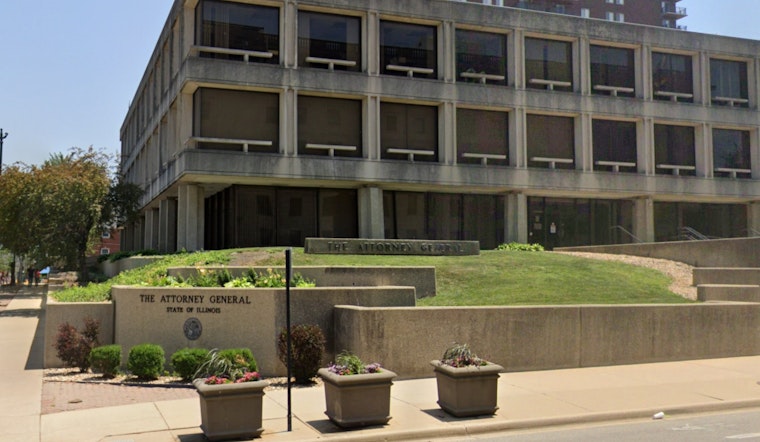
Following a decisive legal battle, Attorney General Kwame Raoul emerged victorious, securing critical homeland security funding that had been abruptly cut off by the Trump administration. The U.S. District Court for the District of Rhode Island granted a summary judgment in favor of Raoul and a united front of 11 other attorneys general, plus the governor of Pennsylvania, against what they claimed were politically motivated slashes to their budgets.
Without prior warning, the U.S. Department of Homeland Security (DHS) and the Federal Emergency Management Agency (FEMA) had tried to significantly reduce or almost forcibly redirect funds from states unwilling to repurpose law enforcement resources for federal immigration enforcement. The Homeland Security Grant Program (HSGP), which typically boasts a budget upwards of $1 billion for various state and local anti-terrorism efforts, saw its allocation for the plaintiff states drop by almost 50%, with Illinois and New York experiencing cuts topping 69% and 79%, respectively.
In a statement obtained by the Illinois Attorney General's office, Raoul shared his approval of the court's ruling, affirming, "Congress approved this funding with the understanding that our nation is at its strongest when all Americans, regardless of where they reside, are protected from terrorist attacks, natural disasters and other life-threatening emergencies."
The court's decision was penned by Judge Mary McElroy, who critiqued the DHS's actions as arbitrary. "Neither a law degree nor a degree in mathematics is required to deduce that no plausible, rational formula could produce this result," McElroy wrote, alluding to the evident disparity in funding cuts and reallocations. The judge ordered DHS to amend the HSGP awards and revert them to the initially stated funding levels, before the last-minute changes. Furthermore, the court struck down additional abrupt changes to the emergency-preparedness programs that included cutting grant awards from three years to a mere one, and a biased population certification requirement that excluded individuals removed under U.S. immigration laws.
Raoul spearheaded the lawsuit in collaboration with the attorneys general of California, New Jersey, and Rhode Island. Connecticut, Delaware, the District of Columbia, Massachusetts, Minnesota, New York, Vermont, Washington, as well as the governor of Pennsylvania, joined the cause, fighting an administration's attempt to strong-arm states into political compliance through fiscal means.





