

























































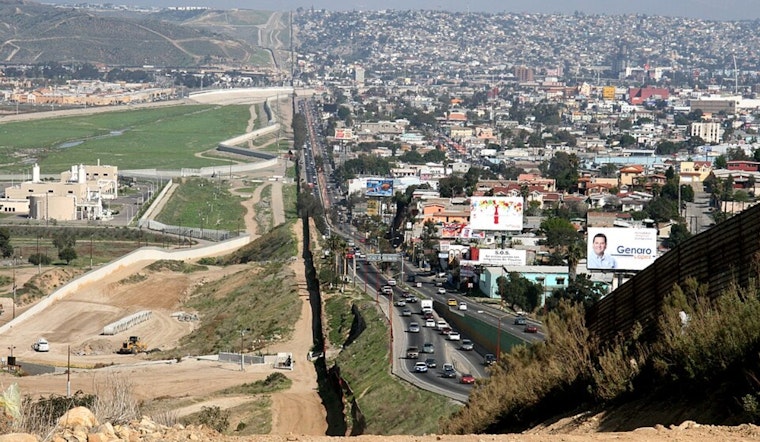
A long-delayed federal regulation set to kick in on Wednesday could hand U.S. authorities a fresh way to shut out people seeking asylum at the U.S.-Mexico border on public health grounds. Advocates and public health experts say the move risks becoming a catch-all barrier for people fleeing violence instead of a narrow tool for genuine disease emergencies. If officials put the rule into play, border communities such as San Diego could see quicker expulsions and extra strain on local shelters and legal aid groups. The measure also quietly tightens the rules on who can receive withholding of removal, a separate form of humanitarian protection that can block deportation to dangerous conditions.
What the rule does
The regulation, posted this week in the Federal Register, allows federal agencies to bar people from asylum when there are “emergency public health concerns generated by a communicable disease,” according to Reuters. It also lets officials deny withholding of removal, which is normally a lifeline for people who would face persecution if sent back to their home countries. The government’s notice describes the rule as another tool border authorities can reach for during a declared health crisis to block people from even getting in the asylum line.
Origins and the rule's delays
The rule has pandemic-era roots. The “Security Bars and Processing” final rule first appeared in the Federal Register on Dec. 23, 2020, at the end of the Trump administration. After that, the Departments of Homeland Security and Justice repeatedly pushed back the effective date, hitting pause again and again while they reviewed the policy. An interim final rule issued in late 2024 delayed implementation yet again, this time to Dec. 31, according to the Federal Register entry. Those filings trace the rule’s text and a long paper trail of administrative delays that kept it on ice until now.
Advocates and public-health experts push back
Immigrant-rights organizations argue that public health language is being repackaged as a border-control tool to restrict asylum and other protections. Sarah Pierce of the centrist think tank Third Way warned the change hands officials sweeping discretion and is likely to be “overused and abused,” Reuters reported. Public health researchers have urged the government to scrap the approach altogether, warning that it could actually undermine disease-control efforts by discouraging migrants from getting tested or seeking care and by relying on categories that are far too broad, according to the Columbia University Mailman School of Public Health.
Legal implications for asylum seekers
The preamble in the Federal Register spells out two ways the bar can be triggered. One is an ongoing public health emergency. The other is a joint determination by the Secretary of Homeland Security and the Attorney General that people arriving from certain affected areas would pose a public health danger. If either trigger is pulled, some migrants could suddenly find themselves barred from asylum and from withholding of removal, according to the departments’ rulemaking documents in the Federal Register. That would leave only much narrower options on the table, such as a deferral under the Convention Against Torture in some cases.
How this could play out at the border
In practice, the rule echoes the emergency expulsions carried out under the Centers for Disease Control and Prevention’s Title 42 public health orders in 2020. Those orders were used to rapidly remove migrants at the southern border and stayed in effect until May 2023, U.S. Customs and Border Protection reports. Officials have previously signaled that the Security Bars rule will not have an immediate impact unless the high legal thresholds for a health emergency or a joint agency determination are met. Critics counter that once the authority exists on paper, it can be dusted off in some future health scare to close off asylum pathways in a hurry.
Court fights are all but guaranteed. Immigrant-rights groups have a track record of successfully challenging sweeping asylum restrictions and say they will take on any rules they view as unlawful, the ACLU noted after a recent decision. For now, the immediate impact on border communities may be limited. Still, the rule quietly reshapes the federal toolkit for turning away would-be asylum seekers whenever officials say a public health threat is at the door.





