

























































A 63-year-old Humboldt Park sandwich shop owner who collapsed while in federal custody at O’Hare is, for now, not being deported. A federal appeals court in Chicago has temporarily stopped the government from removing the man, identified by relatives as Asif Amin Cheema and sometimes known as Amin Choudry. Cheema, who owns Best Sub #2 on North Avenue, has been held in federal custody since a September arrest, and his family and lawyers argue he needs steady medical care that they fear he will not receive if sent back to Pakistan.
According to the Chicago Sun-Times, Cheema was taken from O’Hare to Resurrection Medical Center after he collapsed, then returned to a detention facility in Clay County, Indiana. The paper reports that the 7th U.S. Circuit Court of Appeals has placed a temporary hold on his removal while judges consider a request for more lasting relief. His daughter, Rabia Amin, told reporters he was arrested on Sept. 17 outside a grocery store on Lake Street in Addison and has remained detained as federal immigration operations in the region have intensified this fall.
Court Paperwork Slams the Brakes
Court records show that a Northern District of Illinois judge in November granted an emergency temporary restraining order that bars federal officials from deporting Cheema while the court reviews his habeas petition, according to Habeas Dockets. The docket in Cheema v. Olson lists that order along with subsequent scheduling entries, including a video status hearing and deadlines for government filings. Defense attorneys say those rulings buy them crucial time to gather medical documentation and make their case in federal court.
Family Sounds Alarm on Health Care
Cheema’s daughter and his attorney have told reporters that the 63-year-old has “severe” health issues, including two prior heart attacks, high blood pressure, and high cholesterol, and that he was supposed to undergo a colon-cancer screening the same week he was arrested, the Chicago Sun-Times reports. Justice Department filings provided to the family and shared with the paper state that Cheema has been subject to a final removal order since 1993. His relatives say he did not know about that order because a previous attorney failed to inform him.
William McLean, Cheema’s lawyer, is quoted as saying his client is “basically dying” in custody and accuses authorities of doing only “just enough” to keep him alive. The family argues that any attempt to deport him now would put his health at serious risk.
Detention Center Under the Microscope
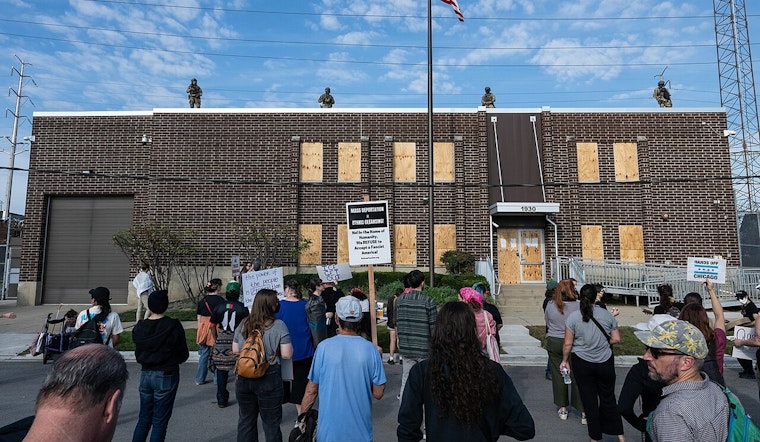
The Broadview processing center, where family members say Cheema was first taken after his arrest, has already been under legal scrutiny. A federal judge recently ordered short-term fixes at the facility after testimony described overcrowding and unsanitary conditions, as reported by Reuters. The court’s order required clean bedding, basic hygiene supplies, and private phone access so detainees can consult with lawyers, measures that advocates argue are essential to protect both medical and legal rights.
Immigration lawyers and rights groups have warned that rapid processing in short-term holding facilities can leave medically fragile detainees without the care they need and without a fair chance to speak with attorneys.
High Stakes in Federal Court
Government filings lean on the long-standing removal order that the Justice Department says justifies Cheema’s deportation. His legal team counters that his medical condition, combined with alleged procedural failures in the old case, calls for a pause and a fuller review. The Northern District docket reflects the temporary restraining order and related scheduling orders entered in November, and those entries remain the legal backbone of the ongoing case, according to Habeas Dockets.
Cheema’s attorneys say they plan to present emergency medical evidence along with broader appeals aimed at blocking any transfer or removal until doctors can thoroughly evaluate his health.
Whatever the courts ultimately decide, the case has turned into a flashpoint in the debate over how recent immigration sweeps in the Chicago area are being handled, particularly for detainees with serious medical needs. Cheema’s family says the holiday season has been overshadowed by uncertainty and fear, and they are urging judges and immigration officials to weigh his health before making any move to deport him. For now, he remains in federal custody, his future tied to dueling medical claims and an unresolved legal battle that is likely to stretch into the new year.





