

























































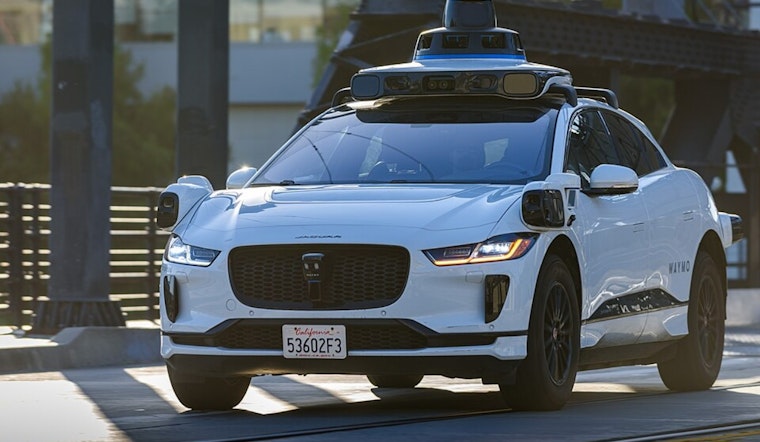
San Francisco found itself in a standstill over the weekend when a massive power outage triggered an unexpected side effect: Autonomous vehicles from Waymo stalling out in the streets. As reported by the SF Chronicle, a substantial number of Waymo's robotaxis ceased operation at darkened traffic intersections, contributing to widespread traffic disruptions throughout the city. Despite the vehicles being programmed to consider intersections without signals as four-way stops, the complete scope of the outage reportedly overwhelmed Waymo's systems, leading to a gridlock exacerbated by the cars queuing behind each other.
San Francisco Supervisor Bilal Mahmood has not only acknowledged the inconvenience caused by these autonomous disruptions but also expressed concern about the potential hazards during more severe emergencies. "San Franciscans deserve answers into why Waymo was unable to handle such a large-scale infrastructure failure, and what they plan to do about it in the future to mitigate these types of impacts," Mahmood told SFGate. Subsequent to the chaos, Mahmood and fellow Supervisor Alan Wong have scheduled a hearing for January 6, 2026, to investigate both Waymo's and PG&E's emergency protocols and service disruptions during such events, as communicated in a social media post by Bilal Mahmood.
I am calling for a hearing at the Board of Supervisors into both PG&E and Waymo in light of the service disruptions during the blackout this weekend in San Francisco.
— Bilal Mahmood 馬百樂 (@bilalmahmood) December 22, 2025
Thousands without power for days due to fires at PG&E substation, stalled autonomous vehicles hindering the… pic.twitter.com/6PT9Fc6Olf
In the aftermath, attention has turned to the readiness of Waymo's system, which grew considerably since its San Francisco deployment in 2023, reaching a fleet size of roughly 1,000 cars today. Comparisons are being made to a 2023 incident with rival Cruise, which had also faced issues during a large-scale event in the city. Waymo, in a statement obtained by the SF Chronicle, conveyed their commitment to integrating the lessons learned from this event and maintaining the trust of the communities they serve.
During the power outage, Mayor Daniel Lurie made a point to reach out directly to Waymo. "I made a call to the Waymo CEO and asked them to get the cars off the road immediately," Lurie explained in a statement. "They were very understanding...but we need them to be more proactive," according to the SF Chronicle. Discussions have also highlighted the broader implications of relying on advanced technologies when existing infrastructures, such as PG&E's power grid, are under strain. William Riggs, a University of San Francisco engineering professor, emphasized the need to evaluate systemic issues that support vehicle technologies rather than the vehicle technologies alone.
Waymo reassured the public that it maintains a 24/7 emergency response hotline and equips vehicles with two-way voice communication for first responders. However, the incident has brought to light questions about whether such safeguards are sufficient for managing multiple system failures simultaneously.





