

























































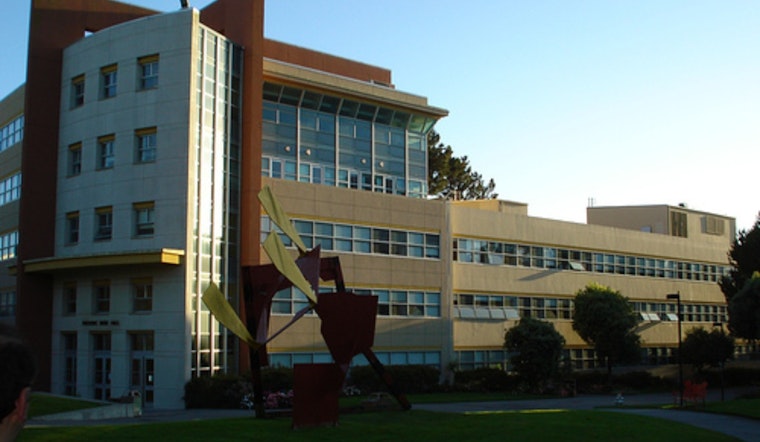
San Francisco State University has rolled out a campuswide buyout offer for most tenured and tenure-track faculty, giving eligible professors the choice to leave at the end of this year or after the spring 2026 semester in exchange for a cash payout. The plan, unveiled at a University Budget Committee meeting, is presented as a way to address a structural budget deficit and reevaluate how classes are staffed. Administrators insist the program is voluntary and targeted, while faculty leaders worry it could punch holes in already packed programs.
What The Buyout Pays And When
According to SFSU Human Resources, faculty who separate by Dec. 31 are being offered 50% of their base annual salary, capped at $55,000. Those who opt to leave on June 30, 2026, could receive 90% of base pay, up to $110,000.
The application window for the December separation runs from Dec. 20 to 23. A second window for the June 30, 2026, separation opens Jan. 21 and closes March 13, 2026. HR’s terms specify that faculty must be retirement-eligible to participate, and applications will be processed on a first-come, first-served basis.
University Sets Aside Funds, Expects Dozens To Take Offer
As reported by Golden Gate Xpress, senior associate vice president Ingrid Williams told the University Budget Committee that SF State has earmarked about $7 million for the program and expects roughly 60 to 75 faculty members to accept the buyout.
The student outlet notes that the university reduced the minimum service requirement from 10 years to five, which broadens the pool of professors who qualify. At the same meeting, President Lynn Mahoney said the university has to restructure so that staffing levels match smaller enrollment numbers.
Departments Barred From Participating
Per SFSU Human Resources, some academic units are explicitly excluded from the Voluntary Separation Incentive Program because the university is required to maintain accreditation standards, licensure pathways, or essential instructional capacity.
Programs that cannot participate include the Physical Therapy graduate program, Mathematics, Computer Science, Nursing and Family, Public Health, the School of Social Work, Special Education, American Indian Studies, Race and Resistance Studies, and the School of Music, among others. HR states that these exclusions are based on tenure density and operational needs, ensuring that students are not left without core classes or required coursework.
Faculty Say Coverage Could Be At Risk
Faculty at the budget meeting quickly raised red flags about how classes will be covered if a wave of senior professors heads out the door. Ryan Howell, chair of the psychology department, told Golden Gate Xpress that about half of the psychology faculty would be eligible for the buyout, warning that a cluster of retirements could strain Fall 2026 course offerings and stretch remaining faculty thin.
Provost Amy Sueyoshi said the goal is to reduce tenure density so the campus can bring in more lecturers to handle high-demand classes. At the same time, she noted, the administration has to juggle that aim with enrollment realities and accreditation requirements.
Enrollment, Faculty Numbers And Tenure Density
SF State’s fact sheet lists about 1,582 total faculty members, including 690 tenured or tenure-track professors and 882 lecturers. By headcount, lecturers already outnumber tenured and tenure-track faculty.
The university also reports roughly 23,700 students, a level administrators say has squeezed the budget in recent years. Campus leaders argue that adjusting tenure density is one of the levers they can pull to align staffing with current enrollment and keep required programs running.
What Happens Next
Applications for the December separation window were made available through DocuSign, and HR indicated that the published deadlines must postmark mailed forms. Faculty who sign up have the option to rescind their participation by mid-June, ahead of the June 30, 2026, separation date.
Human Resources will review submissions and may delay separation dates for positions it deems critical to maintain business continuity. Department chairs, student organizations, and campus unions say they plan to closely track hiring decisions and course schedules as the buyout program unfolds.





