

























































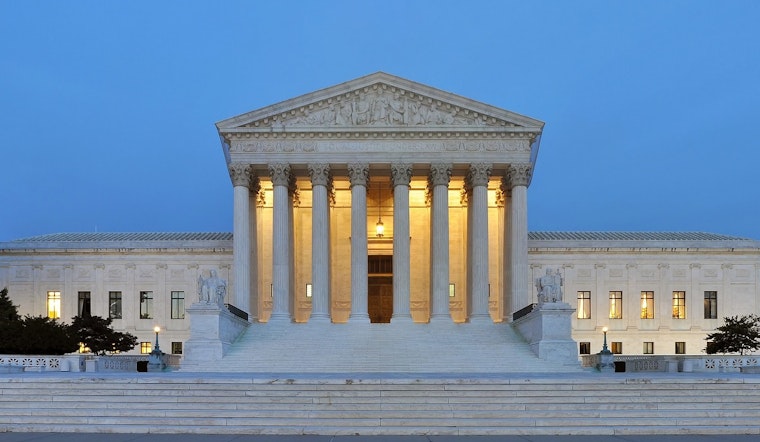
In what's shaping up to potentially be a landmark decision, the Supreme Court has taken on President Donald Trump's bid to expand executive power by allowing for the removal of independent agency board members without cause. According to NBC Chicago, the Trump administration has set its sights on overturning a decision from 1935 known as Humphrey's Executor, which unanimously limited when presidents can directly dismiss such board members.
Arguments were made on Monday, with administration lawyers advocating for the president's right to fire Federal Trade Commission member Rebecca Slaughter without cause. The Supreme Court, with its conservative majority, seems poised to possibly embrace the administration's stance. Indeed, President Trump has already removed Slaughter, along with board members from the National Labor Relations Board, the Merit Systems Protection Board, and the Consumer Product Safety Commission, as reported by AP News.
Amidst the shake-ups, two officials remain unaffected: Lisa Cook, a Federal Reserve governor, and Shira Perlmutter, a copyright official at the Library of Congress. President Trump has also expressed a desire to remove Cook over allegations of mortgage fraud, which she denies, stating, "I did nothing wrong." The Supreme Court has indicated that the Federal Reserve may be treated differently from other independent agencies in this context.
An additional dimension to the Slaughter case raises the question of what happens after an illegal termination—is reinstatement on the table? "Fired employees who win in court can likely get back pay, but not reinstatement," Justice Neil Gorsuch wrote earlier this year. This statement could critically impact Cook's ability to remain in her post. Adding to the uncertainty, the court is set to entertain separate arguments in January regarding whether Cook can keep her job while her court challenge proceeds.
The sweeping influence of Chief Justice John Roberts in such matters is evident. He has consistently authored opinions since 2010 that reduce the restrictions on a president's firing power. In a significant 2020 decision, he wrote, "the President’s removal power is the rule, not the exception," upholding Trump's dismissal of the head of the Consumer Financial Protection Bureau; the agency had job protections similar to those upheld in the Humphrey's Executor decision. Moreover, in the 2024 immunity decision shielding Trump from prosecution for his attempts to overturn the 2020 election results, Roberts included the firing power among the president's inviolable powers, beyond Congress's remit to limit.
The historical backdrop for today's legal battles includes the 1935 FTC member who challenged President Franklin Roosevelt's effort to replace him—a move that spawned the Humphrey's Executor ruling. This case has since served as a bulwark preserving the independence of regulatory agencies by asserting that a president can only remove a commissioner for "inefficiency, neglect of duty, or malfeasance in office."





