

























































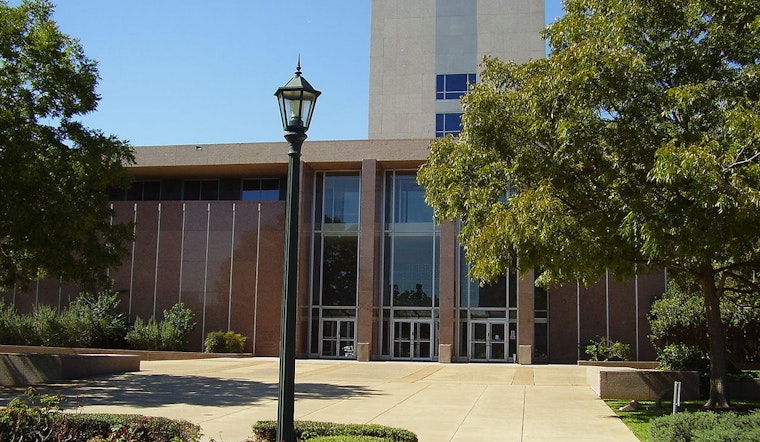
Austin’s big bet on local marijuana policy just ran into a brick wall in Austin’s own backyard at the Texas Supreme Court.
On Friday, the court refused to take up the city’s appeal over a voter-approved ordinance that limited local enforcement of low-level marijuana offenses and banned no-knock warrants. By declining to review the case, the justices left in place an appeals court ruling that has the ordinance on ice and deepened the legal fog surrounding the Austin Freedom Act. City leaders had asked the high court to step in. It did not.
According to the court’s orders list, the city’s petition for review was denied on Friday, as recorded by the Texas Judicial Branch. That denial preserves an April opinion from the Fifteenth Court of Appeals and a temporary injunction that blocks the Austin ordinance from being enforced, a turn of events local outlets such as FOX 7 Austin have been tracking.
How Austin got here
Voters in Austin signed off on the Austin Freedom Act, listed on the ballot as Proposition A, in May 2022 with more than 85 percent support, according to Community Impact. The ordinance instructed local police not to arrest or cite people for certain misdemeanor marijuana possession offenses and imposed an effective ban on no-knock warrants.
Supporters framed the measure as a shift in enforcement priorities that matched local values. State lawyers countered that the ordinance crossed a legal line by clashing with statewide criminal statutes that lawmakers in Austin, the capital city, do not get to ignore.
State lawsuit and appeals
In 2024, Attorney General Ken Paxton filed suit against Austin and several other Texas cities, arguing that their decriminalization-style policies violated state law, according to Texas Public Radio. A Travis County judge initially dismissed the state’s challenge in Austin, giving city officials and activists a brief legal win.
The state did not stop there. Prosecutors pushed the fight into the appeals courts and sought injunctions in multiple cases, a strategy that helped produce a series of rulings from the newly created Fifteenth Court of Appeals this spring that went against some local measures.
What the denial means
Because the Supreme Court turned down Austin’s petition, the appellate decision and its injunction stay in place for now. In practical terms, that means Austin cannot lean on its voter-passed ordinance while the broader litigation continues, according to the Texas Judicial Branch.
City attorneys argued that once voters approve a certified initiative, councilmembers have no legal power to block it. State lawyers responded that whatever the ballot box says, local ordinances cannot conflict with state criminal statutes. Those dueling theories, about both state preemption and the limits of the local initiative process, are now left for lower courts to sort out.
Local ripple effects
The Austin fight is part of a broader regional pattern. Earlier this year, the Fifteenth Court of Appeals overturned San Marcos’ marijuana ordinance, and city councils in Bastrop and Lockhart have declined to implement decriminalization measures that their voters approved, as reported by the Texas Standard.
Backers of these local measures say the decisions out of the courts and city halls are chipping away at the very idea of local control and undermining clearly expressed voter intent. Opponents argue that, like it or not, state law is supposed to be applied uniformly and that criminal statutes are not something cities can rewrite at the ballot box.
For now, the legal battle returns to the lower courts. Austin activists and city lawyers say they will be tracking the next steps closely as the case moves forward. Ongoing litigation and any future legislative responses will ultimately determine whether voters’ choices on policing and low-level marijuana enforcement can survive state preemption claims or stay stuck in legal limbo.



