

























































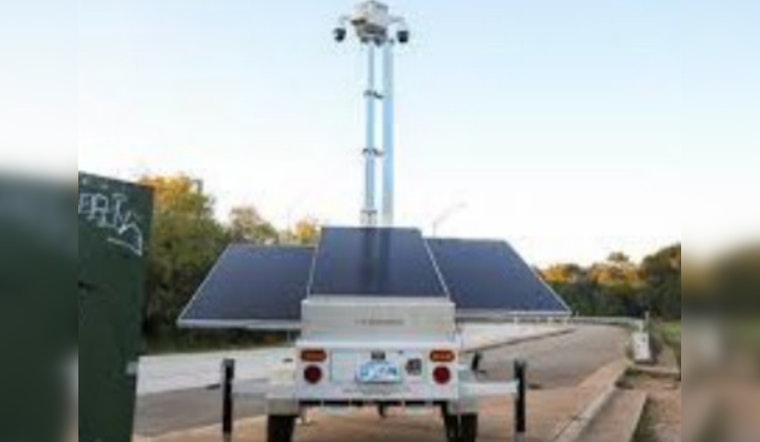
Austin officials say a pilot program that rolled mobile security camera trailers into busy park parking lots resulted in a sharp drop in reported vehicle break-ins at those sites. The trailers, parked in high-traffic areas across multiple parks and greenbelts for several months, were billed as a kind of temporary security detail on wheels. Now, city staff are getting ready to ask City Council to lock in a longer-term version of the program at an upcoming meeting.
The city tested the trailers at 15 parks and tracked crime numbers before, during, and after each deployment. Reported vehicle burglaries dropped by more than 50% across those locations, and nine of the 15 parks logged fewer incidents while the trailers were on-site. Barton Creek Greenbelt saw reports fall from roughly 100 burglaries to 21, while Mayfield Park went from about 80 to 18. At some parks, the biggest improvement happened while the trailers were in place, followed by an uptick in reports once they were pulled out, according to KVUE.
Pilot Context and Earlier Enforcement
The trailer experiment came after a run of rising vehicle burglaries at city parks. Austin Police Department data showed more than 8,200 vehicle break-ins in 2024 and several arrests tied to park burglaries in early 2025, according to KUT. At the same time, a proposal to layer AI-driven analytics onto the camera system drew pushback from residents and privacy advocates, and the city ultimately put an AI contract on ice last year, Austin Monitor reported. Those earlier fights are shaping how officials say they will design any wider rollout.
Council Vote and Contract Plans
Parks and Recreation staff plan to bring a three-year contract for the trailer system to the City Council on Feb. 5, with officials saying the cost would be covered by the department’s existing operational budget. The proposed deal is with a vendor that provides live-view mobile camera trailers and remote monitoring, according to KVUE.
Community Reaction and Privacy Questions
Privacy advocates warn that adding more cameras, especially systems equipped with analytics, raises concerns about how footage is stored, who can access it, and how it might be used. Those worries helped stall the earlier AI proposal, Austin Monitor reported. On the other side, some park regulars and neighborhood groups say the trailers seemed to scare off would-be thieves at the pilot sites, pointing to fewer smashed windows and less obvious overnight theft activity while the units were parked nearby.
How Parkgoers Can Protect Their Vehicles
While the debate over surveillance plays out, the Austin Police Department and city officials are still leaning on the basics: lock car doors, stash valuables out of sight, pick well-lit spots and consider dash cameras or tracking devices, according to a City of Austin release. APD has pitched the mobile trailers as one piece of a broader enforcement and prevention strategy to keep park visits from ending with a phone call to insurance, the City of Austin reported.
If the Council signs off on the contract, staff say they will move the trailers into other high-risk parking lots and keep tracking numbers to decide whether the program should become permanent. For now, Austin parkgoers get a mix of extra watchful eyes in the lots and a fresh round of arguments over how much surveillance belongs in the city’s green spaces.





