

























































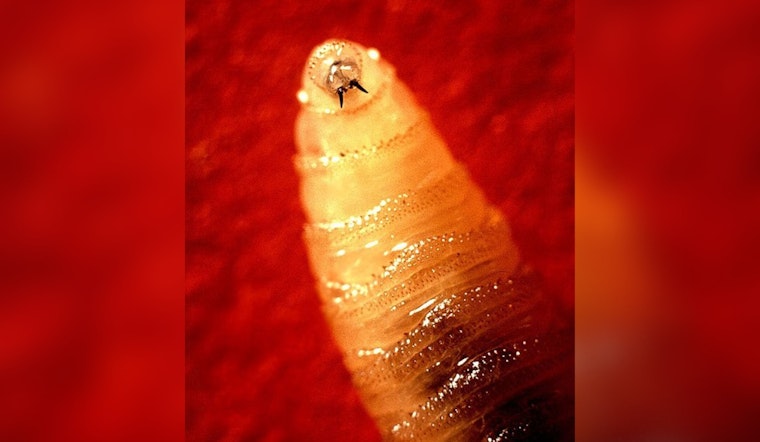
An unsettling parasitic pest making its way north through Mexico has El Paso veterinarians sounding the alarm and urging pet owners to keep a close eye on any cuts or recent surgical sites. The culprit is the New World screwworm, whose larvae feed on living tissue and can cause fast, devastating damage if they get established in a wound.
The latest concern stems from a detection late last month in a six-day-old calf in Tamaulipas, roughly 197 miles from the Texas border, according to Reuters. The case is part of a broader northward spread through Mexico that has already led to tighter controls on live-animal trade.
What local vets are saying
On the ground in El Paso, veterinarians are asking owners not to shrug off anything that looks or smells off around a wound. Dr. Priscilla Bowens, president of the El Paso Veterinary Medical Association, told KVIA that owners should watch for a foul or unpleasant odor, excessive licking, signs of pain, or even visible movement in a wound.
Her message for anyone tempted to play at-home surgeon: "Do not try to get it out yourself," she said, warning that improper removal can worsen tissue damage and can even be fatal in pets. Instead, she urged owners to call their veterinarian right away if they see anything suspicious.
How screwworm infects animals
According to the World Organisation for Animal Health, female screwworm flies lay eggs at the edges of existing wounds or in natural body openings. Within 12 to 24 hours, those eggs can hatch, and the larvae then burrow into living tissue and feed aggressively.
That rapid life cycle lets infestations explode in a short amount of time, turning what looks like a minor injury into a deep, painful, and expanding wound that requires prompt veterinary care.
Officials' response and new tools
Federal officials say New World screwworm is not currently present in the United States. As a precaution, however, the U.S. Department of Agriculture has closed southern ports to live-animal imports, according to USDA APHIS.
In December, the Food and Drug Administration moved to conditionally approve drugs to treat screwworm in dogs and cattle, giving veterinarians approved tools to use if infestations reach U.S. animals, per the FDA.
Texas Agriculture Commissioner Sid Miller has also urged ranchers and pet owners to be especially vigilant in light of the detections in Mexico, according to the Texas Department of Agriculture.
What to look for and do
Veterinarians recommend that owners routinely check recent surgical sites and any wounds for a foul smell, increased or obsessive licking, or visible movement, and to seek veterinary care immediately if they see those signs, as KVIA reports.
Public-health guidance notes that human cases are uncommon but still possible, and suspected infestations should only be handled by medical or veterinary professionals; the CDC offers additional information and recommendations.
Do not attempt to remove larvae yourself, since improper removal can increase tissue damage and raise the risk of infection.
Local veterinarians stress that quick identification and professional treatment remain the best defense for pets and livestock. If you suspect a screwworm infestation, contact your veterinarian or your state animal-health office right away.





