

























































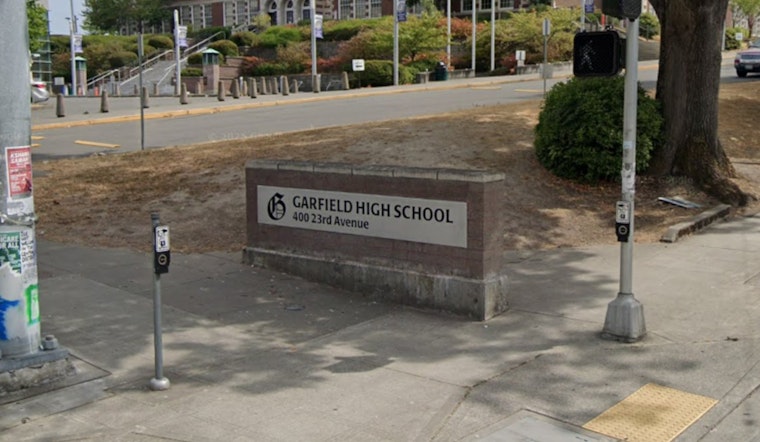
Seattle’s first homicide of 2026 started more than half a century ago, in a schoolyard dispute outside Garfield High. Joseph Garrett, who was paralyzed as a teenager after that shooting, died on Jan. 4 at age 71, and county officials now say the decades-old gunshot wound is to blame. The fatal shot was fired near Garfield in the early 1970s, and the suspected shooter was never charged.
The King County Medical Examiner’s Office conducted an autopsy and, in a Jan. 6 decedents list, classified Garrett’s manner of death as homicide caused by a historical gunshot wound, according to the King County Medical Examiner’s Office. The listing for case 26-00036 cites septic complications and a gunshot wound among the contributing factors. That official ruling is what places Garrett’s death on the ledger as one of Seattle’s first homicides of 2026.
How a 1970s shooting became a 2026 homicide
Contemporary coverage and more recent reporting sketch out what happened outside Garfield. A fight near the school in the early 1970s left a 19-year-old Garrett shot and eventually paralyzed, and he then lived for decades with the consequences of that injury, according to KUOW. The station points to a short Seattle Post-Intelligencer item from October 1973 that described a scuffle at 25th Avenue and Jefferson Street, in front of what is now Garfield High School.
The school’s campus is located nearby at 400 23rd Ave, according to Seattle Public Schools. Beyond those sparse details, publicly available archival information about Garrett’s life between the shooting and his death remains limited.
Casey McNerthney, communications director for the King County Prosecuting Attorney’s Office, told KUOW, “we believe this is the longest delayed-death homicide that has happened in King County.” In a case note, Detective Rolf Norton at the Medical Examiner’s Office wrote that “Those involved are deceased,” and Seattle Police Detective Brian Pritchard told KUOW that the person believed to have fired the shot was never charged and died in 2009. With the suspected shooter dead and no new forensic findings announced, prosecutors are left with very little room to maneuver on a file that has been dormant for decades.
Legal note
Washington law allows murder charges to be filed at any time, with no statute of limitations on homicide, which is why an injury from long ago can still be the basis for a modern homicide ruling and potential review. The list of offenses that may be prosecuted at any time is summarized by Justia. In practice, however, the death of a suspect and aging or missing evidence mean many such old cases never make it back into a criminal courtroom.
Why investigators revisit old files
Advances in forensic science, from more sensitive DNA testing to investigative genetic genealogy, have made it possible to revisit older cases that once looked unsolvable. For example, investigative genetic genealogy helped Seattle police identify a suspect in a 1967 killing, and similar techniques have broken open other long-running cold cases, as reported by the Associated Press and published by HeraldNet. These tools do not fix problems like lost records or a deceased suspect, but they have shifted the landscape for investigators who return to aging files.
For now, Garrett’s death sits in county records as a homicide, a reminder that the legal and medical labels on a death can change many years after the original injury. Seattle Police and the King County Medical Examiner’s Office have not announced any plans for new criminal filings related to the case. Instead, it stands as a stark example of how old violence can reappear in modern bookkeeping, even when the people at the center of the story are no longer alive.





