

























































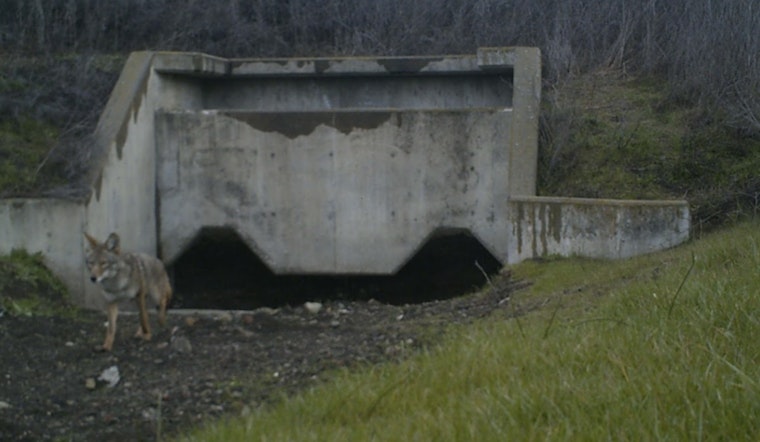
Bay Area wildlife is set to safely cruise above and around human traffic thanks to a new agreement between the Santa Clara Valley Transportation Authority (VTA) and HDR Engineering. According to VTA's announcement, their board recently approved the first steps in what appears to be an ambitious effort to construct wildlife crossing structures in Coyote Valley. The crossings will span U.S. Highway 101, Monterey Road, and railroad lines in South Santa Clara County with an eye towards enhancing regional biodiversity and safety.
Carolyn Gonot, VTA’s general manager and CEO, pointed out to VTA that "Investing in wildlife crossings helps reduce collisions and ensures our roadways better coexist with the region’s natural habitats for the long-term health and safety of all." Traffic between San José and Gilroy has been a concern not only for commuters but also for local fauna. A 2021 study by the UC Davis Road Ecology Center illustrated that an average of 1 mile of U.S. 101 near Coyote Creek ranked among the deadliest for wildlife due to frequent collisions, underscoring the need to safely direct rather than disrupt these natural migratory paths.
The Peninsula Open Space Trust (POST) is spearheading the strategy and has secured funding for the wildlife corridor initiative. They've worked with the City of San José and the Santa Clara Valley Open Space Authority over the past decade to purchase and protect open space in Coyote Valley, highlighting not only its ecological value but also its importance for the well-being of county residents. "Coyote Valley is a critical landscape for Santa Clara County residents and for local wildlife who need to move between the coastal and inland mountain ranges to find food, shelter and mates," POST’s president Gordon Clark told VTA.
Key to the project's momentum has been the significant funding from the California Wildlife Conservation Board, California's 30x30 initiative, and the collaboration between POST and VTA. "Wildlife don’t observe county or municipal boundaries, of course, but they all-too-regularly encounter the mortal threats that our transportation corridors pose. So, we must create safe passages - for their survival and ours," remarked Dr. Jennifer Norris, director of the California Wildlife Conservation Board, as stated in VTA's article. HDR Engineering's immediate challenge will be to take POST's feasibility studies and design work to the point of beginning construction as early as possible, possibly in 2028, assuming funding remains available.





