

























































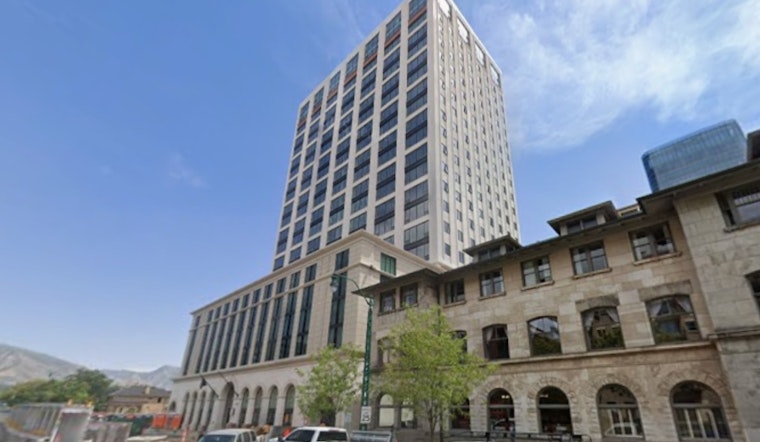
Salt Lake City's 25-story former University Club Tower at 136 E. South Temple has traded briefcases for bathrobes, reopening as Seraph at South Temple, a 217-unit residential high-rise that quietly started leasing in January. Developer Hines stripped the 1960s office block down to its bones, then rebuilt it with modern glass, upgraded systems, and a new rooftop amenity level, dropping a fresh cluster of luxury rentals into downtown. It is one of the largest office-to-housing conversions Utah has seen and adds a high-end option in an already tight urban rental market.
Hines laid out the project details in a January press release, noting that the 25-story, roughly 217,000-square-foot structure now holds 217 residences, ranging from studios to three-bedroom penthouses. The firm also leaned on the sustainability angle, estimating about a 74% reduction in embodied and operational carbon compared with building the same thing from scratch, and pegged entry rents at around $1,700 a month. Hines billed Seraph as its first office-to-residential conversion, saying interior systems were fully replaced to suit housing needs, while the original concrete-and-steel frame was kept in place and wrapped in a new high-performance exterior.
Local reporting makes clear the flip was far from a simple makeover. KSL reported that crews turned to robot mapping tools to hunt down undocumented interior systems, uncovered surprises during demolition, and even extended an elevator one floor higher to reach the newly opened-up rooftop. Built in 1966, the tower stands about 274 feet tall and originally held roughly 217,000 square feet of office space. Project officials told KSL the work dragged into late 2025 because the old blueprints lacked the level of detail modern builders expect, although the team ultimately got the conversion over the finish line.
Amenities and resident spaces
Inside, the building now plays up its views and amenity game. Residents get a seventh-floor lounge with an outdoor pool and hot tub, a large clubroom and fitness center, an indoor pet spa, and a mix of co-working and entertainment areas. The Salt Lake Tribune reported that the tower’s small original window bays were swapped out in many units for larger expanses of glass to pull in more light and sightlines. Up top, the rooftop comes outfitted with fire pits, grills, and seating that look out toward Temple Square and the Wasatch Range, intended primarily for tenants, with limited event bookings still only under consideration.
Design, pricing and who it’s for
Washington, D.C. firm Hickok Cole led the redesign and, according to Hickok Cole, carefully reworked the exterior to carve in larger windows along the north and south faces while turning the podium and former parking levels into amenity and common spaces. Leasing materials and reporting show how the numbers shake out: Hines lists starting rents around $1,700, while KSL has noted that prime penthouse units land much higher. Most of the tower’s 217 homes are one- and two-bedroom apartments, with a smaller share of studios and three-bedroom penthouses stacked on the upper floors.
What this means for downtown
Developers and planners say Seraph offers a concrete example of how older office buildings can be reused to add housing relatively quickly, while also cutting embodied carbon compared with new construction. The project arrives as Hines’ larger Main Street skyscraper ambitions have stalled, a saga local outlets have tracked closely, highlighting why adaptive reuse has become an appealing way to boost downtown housing supply. For a city debating how to grow its housing stock, Seraph lands as a high-end, design-forward option that other property owners may be eyeing as a template.





