

























































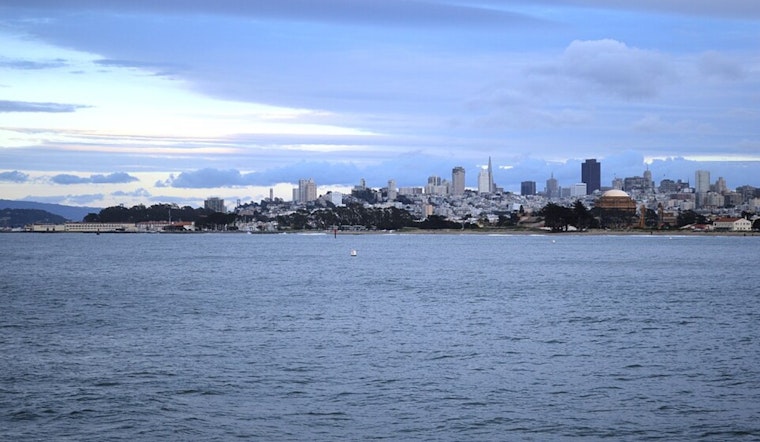
The Bay Area woke up to something it rarely experiences this morning: an Extreme Cold Warning. While the rest of the country might scoff at temperatures hovering in the 20s and 30s, for a region more accustomed to mild winters, this cold snap represents a genuine weather event—and a first for local forecasting history.
According to the National Weather Service, high pressure building into the Great Basin combined with a coastal trough off California has created offshore flow conditions. This "high and dry pattern" is driving temperatures down to levels that prompted the NWS to issue its first-ever Extreme Cold Warning for the Bay Area—specifically affecting interior Monterey County, San Benito County, and the eastern Santa Clara Hills from 1 AM to 9 AM Friday. The Watchers reports minimum temperatures ranging from 25 to 32°F across the warning areas.
A New Warning System Debuts
The Extreme Cold Warning isn't being issued because this is historically frigid weather, it's actually part of the National Weather Service's updated hazard messaging system. As the San Francisco Chronicle explains, the agency discontinued wind chill watches and warnings in 2024, consolidating them into extreme cold watches and warnings. The new system issues Extreme Cold Warnings when temperatures fall to or below 32 degrees for at least two consecutive hours across a broad area, while Cold Weather Advisories apply when temps are forecast between 33 and 36 degrees.
Most of the Bay Area falls under Cold Weather Advisories rather than the more severe warning. According to Axios San Francisco, temperatures in the East Bay and South Bay are expected to hit mid- to low 30s and potentially freezing, while San Francisco proper could see temps dip into the 30s—cold enough to make longtime residents dig out winter gear they forgot they owned.
Don't Let the Sunshine Fool You
Here's where this weather pattern gets peculiar: the days will actually be pleasant. The offshore flow brings clear skies and sunshine, creating a deceptive warmth during afternoon hours. But as the San Francisco Chronicle notes, that clearing is precisely what makes the nights so cold, as skies turn mostly clear and winds weaken, heat escapes more efficiently overnight, allowing temperatures to drop sharply after sunset.
The NWS technical discussion reveals the meteorological mechanics at work: a strong ridge of high pressure will build over the eastern Pacific, right as a deepening upper level low sinks into the Great Basin, according to the San Francisco Chronicle. This configuration favors what forecasters call an "inside slider" setup, with weak offshore winds, dry air, and efficient overnight cooling.
Vulnerable Populations at Risk
While many Bay Area residents can simply turn up the thermostat, the cold poses serious risks to the region's unhoused population. Cold conditions will be hazardous to sensitive populations such as unhoused individuals, the The Mercury News reports the NWS warned. Prolonged exposure to these conditions can lead to hypothermia for people, pets, and livestock.
Santa Clara County has responded by opening warming centers throughout the area. As reported by KQED, county libraries and select community centers are operating as warming centers during regular business hours. Community members experiencing homelessness can call the Here 4 You Call Center at (408) 385-2400 to seek refuge from the temperatures.
Dangerous Surf Conditions Compound Weather Concerns
As if the cold weren't enough, the Bay Area coastline is simultaneously dealing with hazardous beach conditions. A High Surf Advisory remains in effect through 10 PM Friday, with the East Bay Times reporting large breaking waves up to 22 feet, strong rip currents, and sneaker waves from coastal Sonoma County to coastal Monterey County.
The NWS marine forecast explains that a moderate period and larger northwesterly swell continues to produce rough sea state with shoaling near the coast, harbor entrances, and bars. For the northern Monterey Bay shoreline specifically, a Beach Hazards Statement warns of waves up to 15 feet, according to The Mercury News. The agency's blunt advice: Stay off of jetties, piers, rocks, and other waterside infrastructure. Remain out of the water to avoid hazardous surf and NEVER turn your back on the ocean.
A Brief Cold Spell
The good news is that this won't last. Forecast confidence is high that the colder pattern will persist through at least Monday morning, but gradual warming is expected starting Saturday. The National Weather Service technical forecast indicates that temperatures will warm by about 20 degrees over the next seven days as the high-amplitude upper-level ridge meanders over the West Coast before shifting westward over the Eastern Pacific.
Despite the dramatic-sounding warning labels, forecasters are clear that this isn't record-breaking cold. San Jose International Airport's daily record lowest minimum temperature is 22 degrees, set back in 1937, the airport hasn't dropped below 30 degrees since December 2013, according to the National Weather Service.
Safety Recommendations
For those venturing out during the cold spell, the National Weather Service offers straightforward guidance: ensure portable heaters are working properly and used correctly, never use generators or grills inside, and make sure animals have food, unfrozen water, and warmth, as reported by Axios San Francisco. Wind chills will make heat loss accelerate, so dressing in layers is essential.
The offshore flow has also generated hyper-localized wind gusts of 40-50 mph on Fremont Peak, Mt. St. Helena, and Mt. Umunhum. Fortunately, as the National Weather Service notes, there are no fire weather concerns and the winds aren't mixing down to populated areas—making this "more of a notable thing rather than an impactful thing."
By early next week, Bay Area residents can expect to return to the mild winter conditions they know and love. Until then, it's time to actually use those winter coats gathering dust in the closet.




