

























































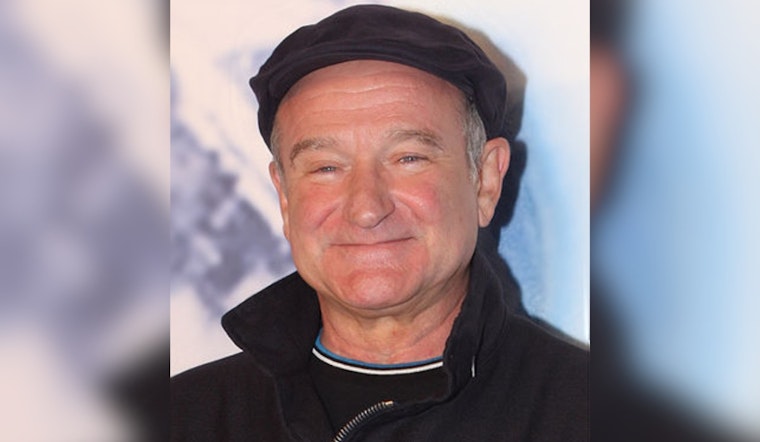
San Francisco’s startup scene just picked up a very familiar last name. Zak Williams, son of the late actor Robin Williams, has joined local company Headlamp Health as a health adviser and is helping promote its new AI platform, Lumos AI. He has framed the work as a continuation of his long-running mental health advocacy and part of his own healing process since his father’s death in 2014. Williams says the technology could help flag early warning signs and get people connected to care sooner.
What Lumos AI Does
Headlamp introduced Lumos AI earlier this month as a decision-support platform aimed at reducing risk in neuroscience drug development by combining biological, behavioral and clinical data into longitudinal patient profiles, according to a press release on PR Newswire. The company describes Lumos as a neurosymbolic, multi-agent system that can sort patients into responder subtypes, fine-tune trial strategy and model patient trajectories so treatments can be matched faster with people most likely to benefit.
Headlamp’s own site says the platform draws on hundreds of millions of multimodal data points and is geared toward research and clinical trial design rather than direct-to-consumer therapy; see Headlamp. In other words, it is built to help researchers and drug developers make smarter decisions, not to chat with patients.
Williams On NewsNation
Speaking on NewsNation’s “Katie Pavlich Tonight,” Williams said he is “very passionate about mental health” and argued that platforms like Lumos can help “identify indicators of things like depression, of suicidal ideation” early, before someone hits a breaking point, as reported by NewsNation. He added that service has been a key part of his own recovery and that precision neuropsychiatry can be strengthened by artificial intelligence. The discussion aired this week during the program’s new run.
Why He Signed On
Williams is not just a spokesperson. He is CEO and co-founder of PYM, a consumer “mental hygiene” company that sells neurotransmitter-focused supplements and promotes daily practices meant to support mood, according to the company’s site. His broader work with mental health nonprofits and his commentary on treatment access have been chronicled by Time. That blend of entrepreneurship and advocacy helps explain why he agreed to advise a company chasing more precise approaches to psychiatric care.
Family Concerns And The AI Debate
Even as Zak leans into AI, not everyone in the Williams family is enthusiastic about how the technology is being used. Zelda Williams has publicly asked fans to stop sending AI-generated videos of her father, calling some of the clips “gross” on social media, in coverage highlighted by Entertainment Weekly. Her reaction underscores the uneasy ethics around digitally recreating deceased performers and raises questions about consent and legacy in the age of generative AI.
Privacy, Regulation And What Comes Next
Behind the celebrity name and slick tech, there is still a messy policy backdrop. Experts say mental health AI currently sits in a regulatory gray zone, with a 50-state legislative review finding gaps in protections for AI-generated behavioral health records and a patchwork of state rules on disclosure and oversight, according to a report on PubMed Central. That landscape means companies working with sensitive mental health data will need strong privacy safeguards, clear transparency practices and human-in-the-loop oversight to avoid both harm and legal trouble.
Headlamp, for its part, has stressed in its press materials that Lumos is targeted at research and trial design to help developers match therapies with the right patients, not at serving as a standalone consumer-facing therapy chatbot. Where that line is drawn, and how regulators respond as tools like Lumos spread, is likely to shape the next phase of AI in mental health care.





