

























































San Franciscans can take another collective sigh of relief, or rather roll smoothly over it: the city continues to outpace its neighbors in road quality. A year-end assessment of the city streets' health by San Francisco Public Works, reinforced by data from the Metropolitan Transportation Commission, has firmly placed our pavement condition above the regional curve. And indeed, the number to beat was seventy-five out of a perfect one-hundred, courtesy of the city’s Pavement Condition Index (PCI) score for the year 2025. That's a "good" rating and a nod to the city's efforts, sitting higher than the average Bay Area score of sixty-seven and certainly ahead of San Jose, which managed a seventy-three. It seems Oakland has quite a journey to catch up, trailing with a fifty-eight.
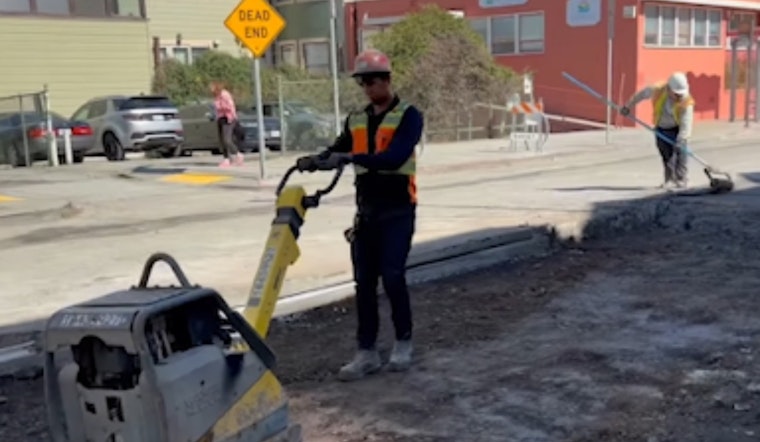
Unfolding over the blocks we traverse, the City has made strides to literally cover more ground this past year. With Public Works' crews adeptly paving five hundred and eighty-one blocks, San Francisco's citizens have been granted smoother commutes and less wear on their tires. Such achievements are the result of both in-house expertise and outsourced capabilities — a partnership strategy exemplified by San Francisco Public Works.
This "good" score isn't a sudden ascent, but rather, a gradual climb from the mid-sixties we sat on in the early 2000s. It's a climb sustained by seemingly unwavering municipal conviction and investment. A substantial sum of $979 million over the last fifteen years or more has transformed roughly two-thirds of nearly thirteen thousand city-maintained blocks into smoother paths for your daily commutes and errands. Yet, hidden within the lines of praise, there's a cautionary note: a potential funding decrease could lead to deterioration of the city's asphalt veins.
Pavement, much like bread or wine, comes with a price — and with age, it requires a craft. Carla Short, the Public Works Director, has the recipe: "Our resurfacing program follows industry best practices by preserving streets in good condition instead of letting them deteriorate. This approach is the most cost-effective," she remarked, per the San Francisco Public Works.





