

























































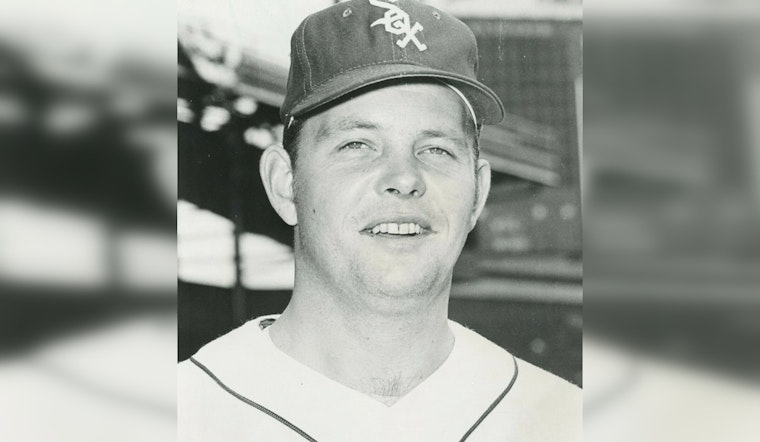
Wilbur Wood, the rubber-armed knuckleballer who practically lived on the mound for the Chicago White Sox in the early 1970s, died Saturday in Burlington, Massachusetts. He was 84. For a remarkable four-season stretch, Wood ranked among baseball's most durable pitchers, racking up 300-plus innings and finishing more games than many modern pitching staffs manage in years.
His death was confirmed to The New York Times by his wife, Janet Wood, according to the Chicago Tribune. The Tribune reported that after his playing days, Wood remained in the Boston-area community where he grew up. No immediate cause of death was released.
Peak years and staggering workloads
From 1971 through 1974, Wood won at least 20 games each season, including American League–leading 24-win campaigns in 1972 and 1973. In those same seasons he logged 376 2/3 innings in 1972 and 359 1/3 in 1973, according to Baseball-Reference. In 1971 he posted a 1.91 ERA with 22 wins, and during that run he was selected to the American League All-Star team three times. In an era already known for heavy workloads, his ability to take the ball on short rest and still pile up complete games put him in his own category.
Memorable feats: the two-day marathon
One of Wood's best-known stretches came in late May 1973, when he picked up a win in a resumed 21-inning game and then came back the next day to fire a four-hit shutout in the regularly scheduled contest, a sequence chronicled by the Society for American Baseball Research. That two-day workload, along with his habit of starting on just two days' rest, helped cement his reputation as a true ironman. SABR's game account sets the performance against the backdrop of 1970s pitching expectations, which make today's limits look almost gentle by comparison.
From Boston debut to White Sox mainstay
Wood made his big-league debut with the Boston Red Sox in 1961, then spent time with the Pittsburgh Pirates before being traded to the White Sox in October 1966, where he remained through 1978, per MLB.com. Chicago initially leaned on him as a heavily used reliever before converting him into a starter, and his knuckleball allowed him to thrive on short rest. That shift turned him into the backbone of the White Sox rotation and a South Side fixture for more than a decade.
Life after baseball
When his major-league career ended, Wood headed back to the Boston area, where he bought a fish market in Belmont and later moved into pharmaceutical sales, jobs he discussed in various profiles over the years. Those stories also highlight his amused take on modern pitching, where 300-inning seasons are museum pieces rather than goals. As reported by Sports Illustrated, Wood settled into a quieter life after baseball, far removed from the grind of taking the ball every few days.
Numbers that tell the story
Wood closed his big-league career with a 164 6156 record, 114 complete games, 24 shutouts and 57 saves, numbers that speak to both his longevity and versatility on the mound, according to Baseball-Reference. He became a free agent after the 1978 season and retired after he was unable to land a contract in 1979, ending a 17-year major-league run. For fans and baseball historians, Wood stands as one of the last great innings-eaters, a reminder of a very different era of pitching on the South Side.



