

























































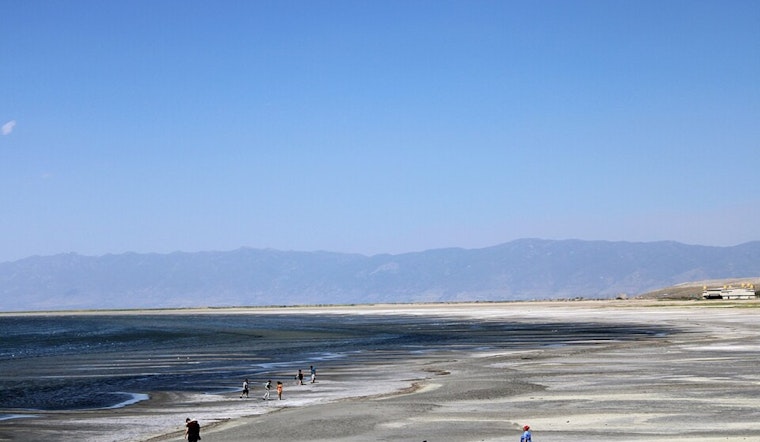
Utah is rolling out a new pitch to farmers in the fight to save the Great Salt Lake: take a check, skip an extra crop, and let the water flow back to the lake instead of the field. The Office of the Great Salt Lake Commissioner says it wants to lean hard on short-term agricultural water leases as a quick, voluntary way to move real water into the shrinking basin, and has asked lawmakers for roughly $5 million to test the idea. Officials describe the effort as one part of a broader playbook that mixes transactions, grant funding, and infrastructure so more of Utah's water actually reaches the lake.
What officials told lawmakers
Deputy Great Salt Lake Commissioner Hannah Freeze told a legislative appropriations committee that the goal is to shift how producers think about their most valuable input.
"The number one thing we want to do is to be able to help our ag producers view water as a commodity," Freeze said, according to FOX 13 News. She said some farmers have proposed not planting an additional crop and instead leasing the water for the lake. A companion bill from Rep. Jill Koford, R-Ogden, would smooth the path for producers to enter such leases. The commission has asked for about $5 million to get the pilot off the ground.
Why agriculture is central to the plan
For years, agriculture has been the dominant consumptive user in the Great Salt Lake watershed, which makes farms the obvious place to look for big, fast savings. Data from Utah State University Extension and state water plans show that irrigation has taken up a large share of the water that could otherwise help refill the lake. Cutting agricultural consumptive use, even at the margins, can redirect sizable volumes in a relatively short time.
Supporters say leases let producers keep their underlying water rights while giving the state a legal pathway to steer conserved water toward the lake's watershed instead of letting it be picked off by other users.
Trust dollars and transaction totals
The Great Salt Lake Watershed Enhancement Trust, co-managed by the National Audubon Society and The Nature Conservancy, has already been in the water market, buying or brokering deals and funding wetland projects aimed at boosting inflows. The trust reports that it facilitated roughly 64,000 acre-feet of water on a diversion basis in 2023 and about 69,000 acre-feet in 2024, with an anticipated 72,000 acre-feet in 2025. Over five years, it has set an objective of reaching 100,000 acre-feet delivered. Those trust dollars, paired with state grants, are meant to be one of several tools for getting more water to the lake, according to the Great Salt Lake Watershed Enhancement Trust.
Lessons from other pilots
Utah is not starting from scratch on the concept of paying water users to temporarily cut back. In the Upper Colorado River Basin, the rebooted System Conservation Pilot Program, or SCPP, has used federal money to compensate irrigators and other users for reducing diversions. Over the 2023 to 2024 period, that program conserved roughly 101,000 acre-feet at a reported cost of about $45 million, according to Aspen Journalism.
Those efforts have not been controversy-free. Critics in the Colorado River Basin have pointed to patchy tracking and warned that without strong legal and technical "shepherding" of the water, conserved flows can simply be picked up by other downstream users and never reach the intended reservoir or lake. Utah officials say any leasing pilot on the Great Salt Lake will need tight accounting and coordination so that the water bought for the lake actually arrives.
Politics, supporters and skepticism
The leasing push is not landing in a political vacuum. The Utah Farm Bureau has signaled support for the general direction, while state leaders highlight what they describe as a major wave of conservation spending. Lawmakers have cited more than $1 billion committed statewide in recent years for water conservation efforts as evidence that the state is putting real money on the table, according to the Standard-Examiner.
At the same time, environmental groups and some water managers argue that turning water use into a more explicit market activity can be risky if programs are not carefully designed. They warn that questions about who can participate, who gets paid, and whether the public truly benefits need clear answers up front.
What comes next
The $5 million request and Koford's companion bill are on deck for lawmakers this session. If they sign off, agencies say the pilot would be used to test how leases are structured, how water is shepherded to the lake, and how payments are set, before any broader rollout.
Supporters say that, if it works, leasing could move water to the Great Salt Lake faster than many infrastructure projects. Skeptics counter that the state still needs stronger guarantees that conserved water will not be intercepted by other users before it reaches the lake. If money is approved, expect a second round of hearings and detailed rulemaking as farmers, environmental advocates, and water managers all push for clear accounting rules and protections that match the high stakes on the lake's shore.





