

























































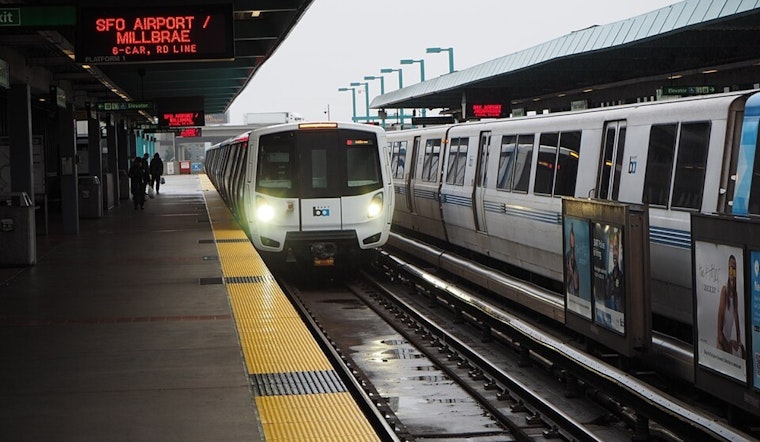
After years of spotty cell service and platform dead zones, BART has finally turned on free Wi‑Fi at five of its busiest stations, just in time for Super Bowl week. Riders at San Francisco International Airport, Powell, Embarcadero, Civic Center, and West Oakland can now hop onto a no-cost network while they wait, a rollout that arrives roughly a year later than the agency first planned.
The new service covers station platforms and paid areas where riders queue, making it easier to access train schedules, maps, and game-week event details on the fly. Internet on the trains themselves is still part of a later phase, so anyone who needs uninterrupted service for their commute will want to keep that personal hotspot handy. Even so, the move is the first visible piece of BART’s broader digital upgrade at key hubs across the system.
The five live stations are the opening wave in a systemwide wireless refresh, and riders will not be forced to hand over an email address or password to get online, according to the San Francisco Chronicle. The Chronicle notes that the free service is not a short-term Super Bowl gimmick; it is set to remain in place after the game and is meant to relieve at least one headache during an already hectic travel week.
In a joint announcement carried on PR Newswire, BART and infrastructure partner Boldyn Networks said the launch relies on Wi‑Fi 6E technology and will roll out to additional stations over time. "Offering high-quality Wi-Fi is being responsive to the needs of our riders and will enhance the customer experience by providing connectivity,” Ravi Misra, BART’s assistant general manager of technology, said in the release. Boldyn, for its part, framed the project as the start of a larger digital buildout across the transit system.
Background and timeline
BART’s board signed off on the digital-project licensing agreement in 2020, with a plan to bring wireless internet to every station and to the newer Fleet of the Future trains, and to finish by 2025, according to BART. That schedule has slipped as crews work along the right-of-way to install cellular equipment and fiber‑optic lines, so complete systemwide coverage remains a work in progress rather than a done deal.
What riders should expect
The new network at the first five stations runs on Wi‑Fi 6E, which taps the 6 GHz band to cut down on congestion and speed up connections on crowded platforms, according to the Boldyn announcement via PR Newswire. For now, coverage is limited to station areas. BART and Boldyn say on-train connectivity will arrive after station work is finished and the network extends farther along the tracks.
Riders should expect a gradual expansion rather than an overnight transformation. Stations will be added in phases over the coming months and years, with service quality likely to vary as construction and testing move from corridor to corridor.
Money and the network
BART’s 2020 planning documents estimate that the licensing package could bring in more than $243 million in telecom-related revenue over a 20‑year span, a major financial incentive for the district to move ahead with the deal, according to BART. Local coverage also reports that Boldyn will cover upfront construction and ongoing operating costs while using BART property and fiber corridors to deploy cellular gear and station internet infrastructure, as detailed by the San Francisco Chronicle.
For now, commuters and visitors at the five active stations should see stronger platform connections and fewer login hoops. BART officials say more stations and on‑train Wi‑Fi will follow in stages, and riders can track station-by-station progress through BART’s ongoing service updates as the digital buildout advances across the system.





