

























































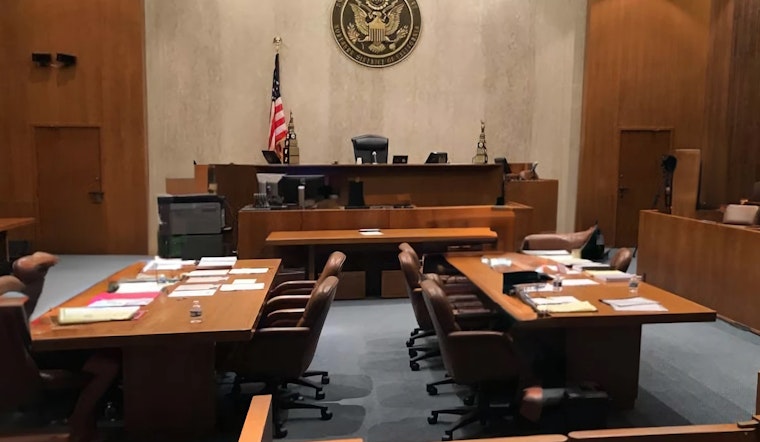
California prosecutors have slapped Credit One Bank with a $10.2 million judgment after accusing the company and its vendors of peppering residents statewide with repeated, harassing debt-collection calls. The stipulated judgment, entered last Thursday in Riverside County Superior Court and signed by Judge Harold Hopp, combines financial penalties with court-ordered compliance measures meant to rein in aggressive calling tactics.
Under the deal, Credit One must pay $9 million in civil penalties and $1.2 million in investigative costs, with about $2.25 million of the penalties going to the Los Angeles County District Attorney’s Office, according to a press release from the Los Angeles County District Attorney's Office. The judgment also orders the bank to follow state and federal debt-collection laws moving forward. Los Angeles County District Attorney Nathan J. Hochman said the outcome "sends a strong message" that companies are not free to harass consumers, according to the office’s statement.
What Prosecutors Say Credit One Did
The civil complaint, brought by a four-county team known as the California Debt Collection Task Force, accuses Credit One of letting its vendors call consumers as many as eight times a day, with two additional calls allowed in certain situations, and of placing calls on back-to-back days even after people told callers to knock it off, according to a news release from the Santa Clara County District Attorney's Office. Prosecutors said those practices ran afoul of California consumer-protection laws and the state’s constitutional right to privacy.
Credit One Pushes Back, but Settles
Credit One, for its part, is not conceding the point. In a statement distributed via PR Newswire, the company said it "expressly denies that it engaged in any wrongdoing" and said it agreed to the judgment to sidestep the cost and hassle of dragging the litigation out further. The bank also noted that other companies have entered into similar settlements, according to its release.
Coverage of the case points out that a federal jury in 2019 found Credit One liable for violating California’s Rosenthal Fair Debt Collection Practices Act, a verdict prosecutors highlighted while pressing for penalties this time around, as reported by Law360.
What the Court Order Forces Credit One to Do
Beyond writing a large check, Credit One and its agents must roll out policies and procedures designed to prevent unreasonable and harassing collection calls and to ensure compliance with both state and federal law, according to the Riverside County District Attorney’s Office. The Los Angeles County District Attorney’s Office says it will receive $2.25 million of the civil penalties along with roughly $300,000 to cover investigative costs under the judgment.
What It Means for California Consumers
California’s Rosenthal Fair Debt Collection Practices Act, which prosecutors leaned on in the complaint, extends federal debt-collection protections so that they cover original creditors as well. Legal guides explain that it lets consumers seek statutory damages, actual damages, and attorney fees when they sue over abusive collection tactics.
On top of that, federal rules under Regulation F set a benchmark: more than seven calls about a specific debt in a week can be presumed harassing, a standard regulators and courts use when weighing call volume. Consumer advocates say people dealing with aggressive collectors should document incoming calls, save voicemails, and, when necessary, send a written cease-and-desist letter, according to guidance from the National Consumer Law Center and summaries from Terms.Law.
Prosecutors cast the Credit One judgment as the latest piece of a broader, multi-county crackdown that has already produced multimillion-dollar resolutions with Allied Interstate, Synchrony, and Capital One, according to the Santa Clara County District Attorney's Office. Advocates say that pairing stiff penalties with court-ordered compliance can nudge companies to overhaul their collection practices instead of treating enforcement actions as just another cost of doing business. The California Debt Collection Task Force says it plans to keep investigating and bringing cases where it finds violations.



