

























































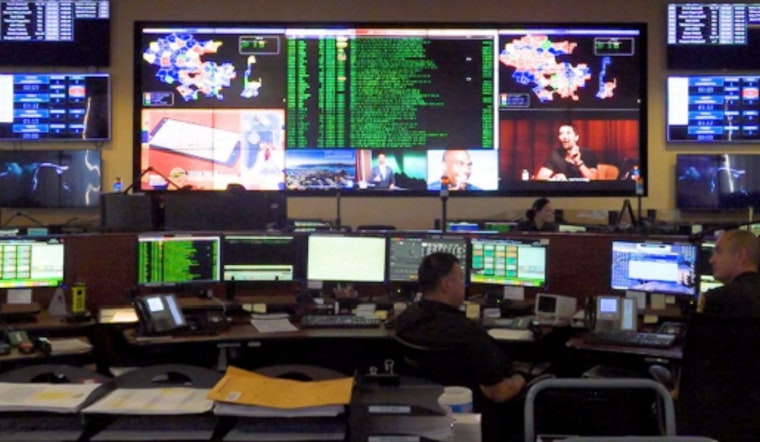
California’s big-ticket Next Generation 911 upgrade is under political fire after years of work, a statewide pause, and a costly reset. Republican lawmakers are now demanding a formal audit and tighter oversight, arguing that if the state can spend roughly $455 million on a new emergency network, taxpayers and 911 callers deserve to know exactly what went wrong.
Cal OES Says $455 Million Spent Before Hitting Reset
According to a November 2025 transition plan from the Governor’s Office of Emergency Services, the state has invested “over $455 million” between July 2019 and June 2024 on planning, installation and operation of the NG911 system. The same document details a revamped statewide approach that replaces the earlier regional model. It calls for “transitional elements” to stabilize and normalize call flows and outlines a new procurement for a primary statewide provider and a backup provider in early 2026, with full migration targeted by 2030, per Cal OES.
Rollout Glitches: Lost Calls, Wrong Routes, 12-Hour Outage
Internal trouble tickets and interviews from early deployments show the new network did not exactly inspire confidence. During testing, some 911 calls were lost or routed to the wrong place, and Tuolumne County reported a 12-hour outage that left residents unable to reach emergency services at all. Dispatchers told NBC Bay Area they saw calls come through with no location data and transfers landing from outside their jurisdictions, a combination that raised serious safety concerns.
Republicans Push Audit, New Rules on 911 Spending
State Sen. Tony Strickland has introduced a “Fix 911 Act” that would require quarterly briefings to the Legislature on the upgrade’s progress, according to GovTech. Assemblymember Josh Hoover has separately asked state auditors to examine how the state’s 911 surcharge money has been used.
“The fact is we lack accountability and transparency,” Strickland said via Yahoo, framing the effort as a matter of both public safety and respect for taxpayers. Local station CBS8 aired a segment echoing GOP concerns over the stalled rollout and mounting bill.
Federal Eyes on Sacramento as Costs Threaten to Climb
The drama is not confined to the state Capitol. The chair of the Federal Communications Commission has asked Gov. Gavin Newsom’s office for information on the troubled upgrade, and vendors have warned that redesigning the system could tack on “hundreds of millions” more in costs. Reporting from Governing notes that California is backing away from the original multivendor regional design and may reopen procurements in early 2026.
Fire Chiefs Want Guardrails Before Any New 911 Switch
On the ground, fire chiefs and county officials have told state advisory boards they do not trust the current rollout plan and want firmer performance guardrails before any more call centers move to the new network. They have pushed for clearer benchmarks, stronger redundancy guarantees and tougher testing standards before additional migrations proceed. Those concerns, along with the state-imposed pause, were detailed in earlier coverage of the troubled project, including advisory-board debates and local pushback that surfaced when the state yanked its botched $450 million 911 overhaul in November 2025.
Legal and Political Fallout Looms
If state auditors move forward, their review could trigger legislative hearings, scrutiny of procurement decisions and changes to how the 911 surcharge is overseen if they find problems with contract management or testing. The audit push and lawmaker requests have been tracked and republished by multiple outlets, including a Sacramento Bee report carried by Yahoo.
Cal OES officials maintain the statewide pause was necessary to fix safety and reliability issues and say they will not resume large-scale migrations until testing and transitional elements prove that call handling is stable, according to NBC Bay Area. For now, lawmakers in both parties agree on at least one point: the public is owed clearer timelines, more realistic cost estimates and a transparent breakdown of how those hundreds of millions have already been spent.




