

























































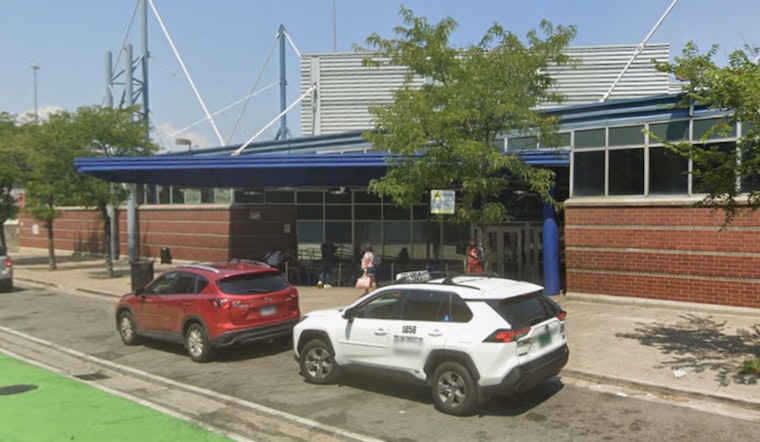
Chicago is making its first official move to keep intercity buses in the South Loop, kicking off a process that could pour roughly $50 million into buying and rehabbing the Greyhound terminal at 630 W. Harrison St. City planners held a public meeting last week to start the work of adding the property to the Canal/Congress tax-increment financing district so those TIF dollars can legally be spent on the station.
How the city would pay
The Department of Planning and Development used the recent public meeting as a required procedural step before the Canal/Congress TIF can be formally amended, and officials say the first hearing on that change is set for April 7. As reported by Chicago Sun-Times, the mayor's budget outlines about $35 million next year and another $15 million the following year to buy and spruce up the terminal, a roughly $50 million package that City Hall says would cover acquisition and modest upgrades.
DePaul's blueprint for a public terminal
Researchers at DePaul University's Chaddick Institute rolled out a report this week that sketches out a relatively low-cost makeover for a city-owned station. The plan calls for a glassed-in foyer, better waiting areas and big "CHI" branding that would advertise the terminal as a regional hub. The paper argues the existing building can be refreshed rather than replaced and reimagined as an inclusive intercity hub for commuters, students and lower-income travelers, according to DePaul's Chaddick Institute.
Who owns the station, and why it matters
The Harrison Street property is in private hands, owned by Twenty Lake Holdings, the real estate arm of Alden Global Capital. The company has been marketing the site, which has fueled worries that the land could be flipped into something far from a bus terminal. Reporting from Engineering News-Record and others highlighted the sales push, and aldermen say they only discovered the city's $50 million rescue plan while combing through TIF projections, a detail flagged in budget coverage this fall by Crain's Chicago Business.
Operators, riders and the temporary fix
FlixBus, which owns Greyhound, has told reporters it is in touch with city officials and supports efforts to keep the site operating in a safe, efficient way. The terminal narrowly avoided closure in 2024 when the operator switched to a month-to-month lease, a short-term fix that pleased no one for very long. That temporary setup has advocates pressing the city to lock in a permanent, centrally located terminal instead of pushing riders to curbside pickup, as documented in earlier reporting from Streetsblog Chicago.
What's next
The current timetable would send the TIF amendment to a Community Development Commission hearing on April 7, with possible City Council Finance Committee and full Council votes in May. If those fall into place, officials say the city could complete a purchase and modest rehab before the end of the year. Aldermen and transit advocates, meanwhile, are watching to see whether the paperwork adds up to a truly public terminal that puts riders first or just another complicated real estate play, a test of how the mayor chooses to spend limited budget firepower.





