

























































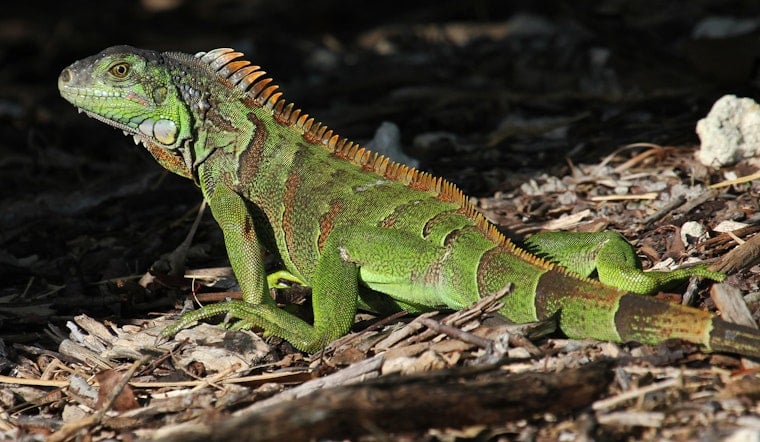
Ziggy, a South Florida dog, is slowly regaining movement after a dead iguana he gobbled up during last week’s cold snap left him suddenly unable to use his legs. His owner, Debbie Angelo, says the normally high-energy pup went from racing around the yard to lying limp on the floor within days. Veterinarians suspect botulism, a rare form of toxin-induced paralysis, and Ziggy is still under close care, showing only small but hopeful improvements.
According to CBS News, Angelo discovered a decomposing iguana in her yard and believes Ziggy chewed off the reptile’s head. Within a few days, he lost the use of his back legs, then his front legs as well. VCA Hollywood veterinarian Dr. Randi Fishkin Ranade told the outlet that Ziggy “appears to have botulism” and that recovery often crawls along rather than snaps back. She estimated it could take up to three weeks for his motor function to return and urged homeowners to “tour your yard and make sure that there are no dead iguanas” after cold snaps to avoid similar emergencies.
Ziggy’s ordeal is not an isolated case. A Palm Beach County owner told WPTV that two bluetick coonhounds that ate a cold-stunned iguana were diagnosed with botulism, and one of the dogs later died. Veterinarians in that case said symptoms typically start within a day or two, often as hind-leg weakness that can progress to full-body paralysis if the animal does not receive prompt treatment. Local emergency clinics have reported a rise in suspected botulism cases since the recent freeze, as stunned or dead iguanas dropped from trees and turned into easy pickings for curious dogs.
Why Cold Snaps Turn Iguanas Into A Hidden Hazard
The Florida Fish and Wildlife Conservation Commission temporarily allowed residents to collect cold-stunned green iguanas during the freeze under Executive Order 26-03, noting that the reptiles can lose muscle control and sometimes tumble from trees when temperatures fall. In a release, the FWC said more than 5,000 iguanas were turned in during the collection window and warned people not to bring stunned animals into their homes, instead advising the use of protective gloves and proper disposal methods. The agency said its guidance is aimed at protecting wildlife and limiting public-health risks that can follow when carcasses are left to decompose.
What Veterinarians Say Pet Owners Should Do
Botulism in animals is caused by ingesting preformed toxin from decaying tissue and is treated mainly with intensive supportive care. Early antitoxin can help in some cases, but most patients need careful nursing until the toxin wears off. The Merck Veterinary Manual notes that recovery can be slow and that the outlook worsens once an animal becomes unable to stand or move on its own.
If a pet eats a dead iguana, owners are urged to call their veterinarian or an animal poison control resource such as Pet Poison Helpline at 855-764-7661 for immediate guidance on whether emergency care is needed.
Angelo told CBS News that Ziggy “is getting there” and that patience is key as sensation and movement slowly return to his legs. Veterinarians continue to urge pet owners in affected neighborhoods to walk their yards after cold snaps, safely remove any fallen iguanas using protective gear and contact a vet at the first sign of weakness or wobbliness in their animals.





