

























































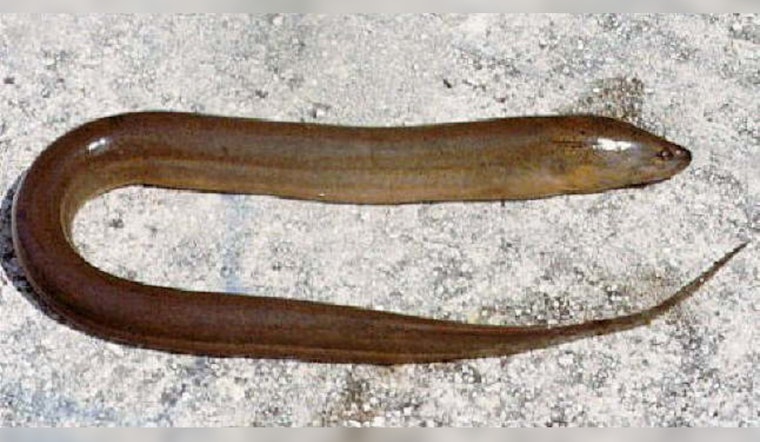
University of Florida scientists have rolled out a DNA "tripwire" that can flag two notoriously stealthy invasive fish from just a few drops of canal water, giving Florida a new early-warning system as the Everglades undergoes massive restoration.
In lab trials the duplex digital PCR assay detected genetic traces of Asian swamp eels and bullseye snakeheads within minutes, and field tests in South Florida canals picked up their DNA in places where nets and daytime electrofishing often turn up nothing. Researchers say the tool could give managers a faster and cheaper way to spot trouble before these invaders quietly spread through restored wetlands.
Published study and the team
The method, detailed in a paper in the journal Ecology and Evolution published last Tuesday, uses a duplex digital PCR approach that screens a single water sample for both target species at once. The authors report that they first optimized the assay in the lab, then validated it on environmental DNA, or eDNA, samples collected from canals where the fish were already known to occur.
How the tripwire works
Environmental DNA consists of tiny fragments of skin, mucus and waste that animals leave behind in the water. Digital PCR technology amplifies and counts those fragments so researchers can tell whether a particular species has been present, even if no one ever sees the fish.
UF scientist Brian Bahder and his colleagues describe the test as extremely sensitive, writing that it can "allow detection of a single cell in a water sample." That level of detection is especially useful in turbid or heavily vegetated canals where fish like to hide, and for species that tend to avoid standard daytime survey gear. Researchers at the University of Florida note that such sensitivity is key when managers are trying to catch invaders early, before populations explode.
Why managers are worried
Both target species are notorious for slipping past traditional surveys. Asian swamp eels are largely nocturnal and often burrow into muddy canal bottoms, while bullseye snakeheads can breathe air and hang on in low-oxygen backwaters that other fish cannot tolerate. Daytime electrofishing and visual surveys regularly miss those behaviors, which gives the invaders time to build up numbers under the radar.
The stakes are high. Everglades restoration is a multi-decadal, multi-billion-dollar effort that will reshape hydrology across South Florida and could alter how invasive species move through the landscape. The National Academies has highlighted that restoration context and the risk that changing water flows could open new pathways for nonnative fish.
Field validation and next steps
In controlled tank trials, the authors report that the assay detected bullseye snakehead DNA within five minutes of a fish entering the water. Field eDNA samples from known sites likewise produced positive detections, and the test did not cross-react with non-target species in the system.
The study recommends building an eDNA sampling network across the broader Everglades footprint so managers can get early warnings of new invasions and track whether removal efforts are actually knocking back the genetic signal over time. The validation data and proposed surveillance framework are detailed in Ecology and Evolution.
How the public can help
Scientists know they cannot sample every canal, pond and backcountry slough, so they are asking the public to keep an eye out. If you come across an unfamiliar eel or a particularly aggressive, air-breathing fish, experts say to note the exact location and grab a photo if it is safe to do so.
Sightings can be reported to the IveGot1 hotline at 1-888-IVEGOT1 or through the IveGot1 reporting portal and app. Local coverage from the Tampa Free Press and guidance from the National Park Service explain how residents can use those tools to help document invasive fish.
What this means for Florida
The team behind the assay is based at the UF/IFAS Fort Lauderdale Research and Education Center and includes members of the Croc Docs lab, which works across South Florida wetlands. They describe the DNA tripwire as a cost-effective complement to boat-based surveys that can help managers focus removal crews where eDNA signals spike.
According to the University of Florida, the work received support from university research initiatives and public agencies. The researchers say they now plan to coordinate with partners to scale up eDNA surveillance across vulnerable waterways in the months ahead, using the new test to keep closer tabs on Everglades invaders before they get too comfortable.



